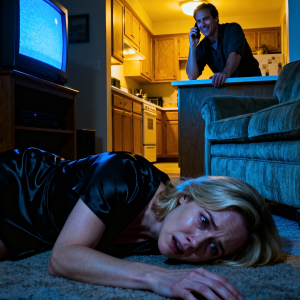
For twenty years, Claire Bennett drank the same “bedtime tea” her husband, Michael, lovingly prepared each night. It smelled of chamomile, with a faint bitterness she could never place.
“It helps you sleep,” he always said, his tone calm, his smile patient. Claire believed him. Michael had always been the dependable one — steady, composed, endlessly reassuring.
But strange things began happening. Her nights filled with vivid “dreams” — strangers wandering through her house, loud laughter, flashes of strobe lights.
In those dreams, she sometimes saw Michael, smiling among them, raising a glass. Each morning she awoke groggy, her memories hazy.
“You’re stressed,” Michael would murmur, rubbing her shoulder. “You’ve always been anxious.” She believed him, ashamed of what she thought was her failing mind.
By fifty, Claire felt like a ghost in her own home. Her memory frayed, her energy drained, her confidence gone.
Michael called her “forgetful Claire” with affectionate condescension. She wondered if she was losing her mind.
Everything changed after a fall in the kitchen. She broke her wrist and spent two nights in the hospital. Away from the tea, her sleep was finally deep and dreamless.
On the second night, a nurse named Julia leaned close and whispered, “Stop drinking whatever he gives you. And tonight—don’t fall asleep.”
Claire froze. “What do you mean?” she whispered, but Julia only squeezed her hand and walked away.
Back home, Michael greeted her warmly, the familiar porcelain cup already waiting. “For you,” he said. The smell hit her like a memory—sweet, then sharp. She hesitated. “I think I’ll skip it tonight.”
His smile faltered. “You need your rest.”
“I’m fine,” she replied, setting the cup aside.
That night, Claire stayed awake, eyes fixed on the sliver of light under the door. Near midnight, she heard footsteps, voices, and the faint hum of music.
Trembling, she crept down the stairs and froze.