The evening sun slipped low behind the pines as Logan Price turned his pickup into the gravel driveway of a small house on the outskirts of Asheboro, North Carolina. The paint on the siding had faded to gray, and the mailbox leaned forward like it was tired. Logan’s hands were tight on the steering wheel, the tension in his chest heavier than the gear he had carried through a year in Iraq.
He had thought of this moment through every dust storm and sleepless night: the moment he would see his seven-year-old daughter again. Grace.
The yard was overgrown. The porch light hung by a single wire. When he stepped out, the air smelled of damp pine needles and something still. He called softly, “Grace?” His voice disappeared into the quiet.
He knocked on the door and waited. No answer. The blinds were drawn, and a faint shape moved behind them, but no one came. Unease pricked the back of his neck. Logan circled around the house, his boots crunching through weeds. Then he heard it—a thin voice carried by the wind.
“Daddy?”
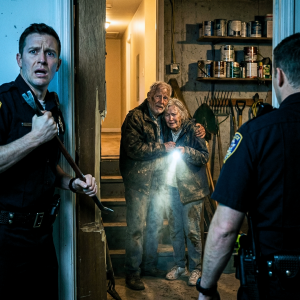
The sound came from the small shed behind the house. He ran toward it, heart pounding. When he pulled the door open, the breath caught in his throat.
Grace sat on a dirty blanket, her cheeks streaked with tears, her hair matted, her small hands gripping the edge of her coat. Faint bruises marked her arms. She looked up, eyes wide.
“Sweetheart,” he whispered, dropping to his knees. “What happened to you?”
She shook her head. “Mom’s friend said I was bad. Bad kids sleep out here.”
For a heartbeat, the world went silent. Then rage and disbelief collided in Logan’s chest. He wrapped his jacket around her and lifted her gently.
“You’re coming with me,” he said.
“Please don’t make me go back,” she begged, clinging to his neck.
“You’re safe now,” he promised.
At the nearest base clinic, the medic’s voice was grim. “She’s malnourished and dehydrated, but she’ll recover. You did the right thing bringing her in.”
Logan sat beside her bed as Grace drifted into sleep. Only then did he allow the tears to fall.
Later that night, his phone rang. Monica, his ex-wife, shouted through the receiver. “You had no right to take her. You’re not fit to have her.”
He looked at Grace’s sleeping face and ended the call. Then he called the sheriff’s office. Within hours, blue lights lit up the dark street outside the house he had just left behind.
In the days that followed, Logan’s life became a blur of interviews, lawyers, and questions. He told the story over and over—the shed, the bruises, the voice in the dark. Monica’s boyfriend, Travis, claimed he had only “disciplined” Grace. Monica said Logan’s time overseas had left him unstable.
His lawyer, Rachel Monroe, warned him. “They’ll try to use your service record against you. Stay calm, no matter what.”
He tried. But each time Grace woke from nightmares crying, his patience slipped. Therapy sessions with Dr. Finn, a quiet-spoken child psychologist, became a refuge. Grace rarely spoke at first. She would sit at the small table, coloring pictures of gray houses with windows closed tight.
Weeks passed. Then one morning, while Logan flipped pancakes in the kitchen, she began to hum. It was faint, almost shy. When she finished eating, she showed him a new drawing—a yellow house with an open door and two smiling figures holding hands.