I never imagined returning to my family estate in Rye, New York, yet my eight-year-old daughter, Sofia, pleaded for one last visit to see her grandparents. I told myself perhaps they had softened over time, that old wounds might heal. The truth hit me like a punch in the gut the instant we crossed the threshold.
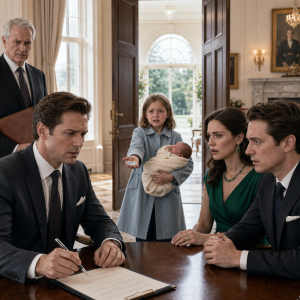
The marble floors reflected the sunlight, yet the house felt colder than the winter wind outside. My mother, Beatrice Hawthorne, barely looked at me, instead scrutinizing Sofia’s worn sneakers as though they carried some moral failing. My father, Jonathan Hawthorne, merely offered a tight nod, his face unreadable, a man who had mastered detachment over decades. And my sister, Vivienne, radiant and annoyingly self-assured, smirked at her phone as if every glance could be monetized.
Lunch was unbearable. My parents rattled off achievements, stocks, and property gains while Sofia silently traced patterns on the embroidered tablecloth. Vivienne’s laughter, loud and performative, grated against my nerves. She spotted her boyfriend recording on his phone, winked, and whispered to him, as though she and the camera were partners in some cruel game.
“Let’s go outside,” Vivienne chirped suddenly, bouncing to her feet. “The pool looks perfect today.”
Sofia hesitated, hugging herself. She had always feared deep water. I followed, every instinct screaming danger.
“Mom… do you think we should wait?” Sofia’s voice trembled.
Before I could respond, Vivienne grinned and counted down, her tone sickeningly cheerful. “Three… two… one…”
Sofia plunged into the water. The splash was massive. She surfaced for a fleeting second, gasping in terror, before sinking again. My scream died in my throat as my father gripped my arm with unnatural force. “Let her be,” he said coldly, as if I were overreacting to a minor inconvenience. My mother folded her arms, silent judgment etched across her face.
Vivienne, phone in hand, laughed. “This is going to go viral!”
I lunged into the icy water. Every stroke felt like pulling fire and ice at once. I grabbed Sofia, her body limp, unresponsive. My hands shook violently as I pressed her small chest, willing her to breathe. Seconds stretched to eternity. Then finally a cough. A tiny, ragged cry.
At the hospital, the staff placed her under observation for secondary drowning. I refused to leave her side, every beep of the machines a heartbeat in sync with my terror. My parents didn’t call, didn’t check. Vivienne’s video, already online, flashed on my phone: 900,000 views. “Mom is a disaster! Can’t even save her kid from the pool!”

Tears blurred my vision. Rage and despair warred inside me. Then I remembered something I had long hidden, something my late grandmother, Ruth Kingston, had entrusted to me: a collection of legal documents, buried in her old email, sealed years ago.
Once Sofia stabilized, I opened that email. Three files: a will granting me 40% of Kingston Enterprises, previously assumed to be fully under my parents’ control; a power of attorney naming me as legal custodian of her estate; and a sealed note titled, In case you or your daughter are ever harmed.
I brought everything to her old lawyer, Martin Eldridge, who confirmed the documents were legitimate. “Your father has been assuming control, but legally, the company answers to you the moment you act,” he said.
The following morning, I authorized a team of auditors into Kingston Enterprises. Within two days, financial malpractice emerged: embezzlement, tax evasion, falsified records, all tied directly to my father.