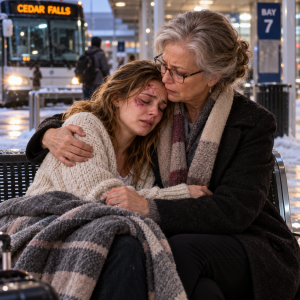
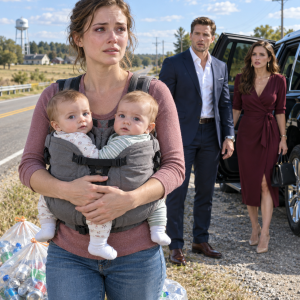
The Call From the Bathroom
At 2:27 a.m., my mother whispered from a police-station bathroom.
“Rachel hit me with a baseball bat.”
I sat upright in bed.
Rain struck the windows of my Richmond townhouse. The red numbers on my clock blurred as I reached for my glasses.
“Where is Daniel?”
Her breathing caught.
“He watched.”
For several seconds, I heard only the buzzing fluorescent light above her.
Then she whispered again.
“He told the police I attacked her.”
I threw back the blanket.
“Where are you hurt?”
“My ribs. My shoulder. My wrist is swelling.”
“Did they call an ambulance?”
Silence.
That answer was enough.
“Mom, listen carefully. Don’t sign anything. Don’t answer any more questions. Don’t let them take your phone.”
“They already tried.”
I froze with one shoe in my hand.
“Who?”
“Chief Mercer.”
Rachel’s uncle.
The man who had attended my brother’s wedding, held their daughter at her baptism, and run the Brookfield Police Department for eleven years.
I pulled on my coat.
“I’m coming.”
My mother’s voice broke.
“They keep saying I’m confused.”
On my dresser stood a photograph of her at my law-school graduation. She had worked double shifts at a pharmacy so Daniel and I could finish college without loans.
She misplaced her keys sometimes.
She forgot where she left her glasses.
But she was not confused.
“I believe you,” I said.
She began to cry.
Not loudly.
Just one small breath collapsing through the phone.
“I knew you would.”
The Wrong Woman Walked Into the Station
The drive to Brookfield usually took forty minutes.
That night, I made it in twenty-eight.
Halfway there, I called the emergency duty attorney at the Virginia Attorney General’s Office.
Martin Shaw answered on the fourth ring.
“Claire?”
“I need an immediate evidence-preservation request for Brookfield Police.”
His voice sharpened.
“What happened?”
“Possible elder abuse, obstruction, evidence tampering, and official misconduct.”
A pause.
“Is this one of our cases?”
I stared through the rain.
“It’s my mother.”
His keyboard began clicking.
“Tell me what to preserve.”
“Body cameras. Dispatch audio. Interview-room video. Station surveillance. Evidence-room logs. Department phones. Vehicle GPS. Every report created after midnight.”
“Done.”
“Send it to state police and the county prosecutor.”
“Claire, you can’t investigate this yourself.”
“I’m not investigating.”
I tightened my grip on the wheel.
“I’m stopping them from erasing it.”
At 3:01 a.m., I entered the Brookfield station.
The lobby smelled of burnt coffee and wet uniforms.
A young desk officer looked up with bored irritation.
Then he recognized me.
His face drained white.
Two months earlier, I had testified before the state legislature about police failures in elder-abuse cases. My photograph had circulated through every department in the region.
“Ms. Bennett.”
I removed my gloves.
“Where is my mother?”
He glanced toward the hallway.
“Chief Mercer is handling the situation.”
“That wasn’t my question.”
Another officer stepped out of the records room and quietly turned off his body camera.
I saw the red light vanish.
He saw me notice.
Then I looked toward the evidence room.
Its door stood open.
A muddy trail crossed the floor and disappeared inside.
My mother’s blue quilt sat folded on a chair nearby. A dark stain marked one corner.
I stepped forward.
The desk officer blocked me.
“You can’t touch that.”
“Has it been logged?”
He said nothing.
“Then don’t pretend anyone here is protecting evidence.”
A door opened at the end of the hallway.
Chief Wade Mercer walked out first.
Rachel followed him wearing my mother’s gray cardigan.
My brother Daniel stood behind her, staring at the floor.
When he finally looked at me, his face held fear.
Not guilt.
Fear.
“Claire,” he said. “You shouldn’t be here.”
I looked past him.
My mother sat alone in a plastic chair near the restroom.
Her wrist had swollen badly. Purple bruising climbed above the collar of her nightgown. Her face looked gray beneath the fluorescent lights.
I walked toward her.
Chief Mercer stepped in front of me.
“We’re still sorting out what happened.”
“Move.”
“Your mother became violent.”
“Move.”
His jaw tightened.
“Inside this department, you don’t give orders.”
I took out my phone.
“Inside this department, an injured seventy-two-year-old woman has been denied medical care while your niece stands behind you wearing her clothes.”
Rachel folded her arms.
“Helen attacked me.”
My mother flinched.
I knelt beside her.
“Did anyone photograph your injuries?”
She shook her head.
“Did anyone offer a hospital?”
Another shake.
I looked at the desk officer.
“Call an ambulance.”
Chief Mercer answered for him.
“That isn’t necessary.”
I raised my phone.
“Then I’ll call one and record you refusing emergency treatment to an injured senior.”
The desk officer reached for the station phone.
Rachel’s Story Was Too Perfect
While we waited, Rachel paced near the vending machines.
“She came at me with the bat,” she said. “I had no choice.”
I looked at her hands.
No swelling.
No bruising.
Only a thin scratch on her cheek.
“Where is the bat?” I asked.
Chief Mercer crossed his arms.
“We haven’t found it.”
My eyes moved toward the muddy trail leading into the evidence room.
“Interesting.”
Daniel finally spoke.
“Mom has been getting worse.”
My mother looked at him.
“Daniel…”
He refused to meet her eyes.
“She’s paranoid. She accused Rachel of stealing. Tonight she snapped.”
“Which doctor diagnosed her?” I asked.