The Night They Mistook My Silence for Surrender

The evening I became a colonel in the United States Air Force, I drove home through the last pale light over Colorado Springs believing, perhaps foolishly, that the two people waiting for me would understand what the day meant.
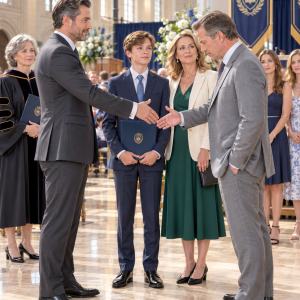
For twenty-one years, I had served wherever I was needed, often leaving with little notice and returning with stories I could never tell. I had missed birthdays, holiday dinners, and ordinary Sunday mornings because a secure phone had rung or an aircraft had been waiting. None of it had come easily, yet that afternoon, when Brigadier General Robert Halstead fastened the silver eagle insignia to my uniform and announced that I would take command of the 47th Cyber Defense Wing, I allowed myself to feel proud.
I thought my husband, Miles, might open a bottle of wine. I imagined my mother-in-law, Diane, offering one of her stiff but respectable congratulations.
Instead, Miles barely looked up from the television.
“So this means more travel?” he asked.
I placed my uniform cap on the kitchen counter.
“It means I’ll be leading one of the most important defensive units in the region.”
Diane, who had been living with us for nearly two years, folded her arms and glanced at Miles.
“A household doesn’t need another commander,” she said. “It needs a wife who knows when to come home.”
I had heard versions of that sentence for years, usually disguised as concern. Miles complained that my career made him feel secondary, although my salary covered the mortgage, his vehicle, our household expenses, and most of the costs connected to the consulting company he claimed he was building. Diane often reminded me that her generation understood sacrifice, by which she meant that women sacrificed and men accepted the results.
That night, I was too tired to argue. I showered, placed my new insignia carefully inside its velvet case, and went to bed.
Sometime before dawn, a harsh vibration dragged me from sleep.
At first, I believed the sound came from my phone. Then a sharp discomfort moved across my scalp, and something heavy fell against my cheek.
I opened my eyes.
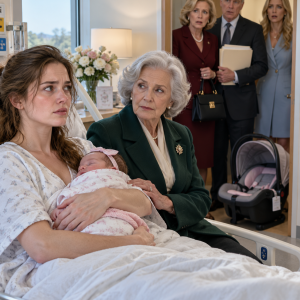
Diane stood beside the bed holding a pair of electric clippers. Dark strands of my hair covered the pillow, the sheets, and the floor around her slippers. One side of my head had been shaved almost to the skin, leaving uneven patches where the clippers had caught too closely.
For several seconds, I could not understand what I was seeing.
“What have you done?”
Diane switched off the clippers.
“I corrected a problem no one else was willing to correct.”
I pushed myself upright, one hand pressed against my scalp.
“You came into my room while I was sleeping.”
“You were never going to listen while you were awake.”
The bedroom door opened, and Miles walked in wearing sweatpants and an old college shirt. He looked at the hair on the bed, the clippers in his mother’s hand, and the tender lines across my scalp.
He did not ask whether I was all right.
“Mom, you went too far,” he muttered. “You should’ve stopped after one side.”
I stared at him.
“That is what concerns you?”
He sighed as though I were creating another inconvenience.
“Your hair will come back, Katherine. But this family won’t recover if you keep acting as though your career matters more than everyone else.”
I had been married to him for twelve years. I had paid his debts after his event-planning business failed. I had supported him through three new ventures, each of which disappeared when the work became difficult. I had welcomed his mother into the house after she claimed she could no longer manage on her own.
Still, he looked at me as though I were the selfish one.
“I have carried this household for years,” I said. “Your bills, your business expenses, your mother’s insurance, this house—everything.”
Miles’s expression tightened.
“Money doesn’t give you the right to ignore your responsibilities as my wife.”
Diane placed the clippers on my dresser.
“Tomorrow you will decline the command. Then perhaps this marriage can become respectable again.”
Something inside me became very calm.
Not numb. Not defeated. Simply clear.
I walked into the bathroom, closed the door, and studied the woman in the mirror. One side of her head had been reduced to uneven stubble. The other side still carried the careful shoulder-length style she had worn during her promotion ceremony.
I picked up another set of clippers from the cabinet and removed the rest myself.
When I returned, Miles looked unsettled.
“What are you doing?”
“Finishing what your mother started,” I said. “From now on, decisions about my body belong to me.”
Diane’s mouth tightened, but Miles seemed relieved when I added, “You were right about one thing. Tomorrow I am going to focus completely on this family.”
They heard surrender because surrender was what they wanted.
They did not understand that I had finally begun protecting the only member of the family I had neglected for years.
Myself.
After they went to sleep, I opened my laptop at the dining-room table. I removed Miles and Diane from every account they did not legally own. I canceled supplementary cards, redirected my salary, contacted my attorney, secured the deed to the house, and submitted updated housing information to the Air Force.
Every step followed the law.
Every change created a record.
At 5:18 in the morning, my attorney, Miriam Cole, returned my call.
Her voice was quiet but urgent.
“Katherine, while reviewing the property records, I found an application using an outdated power of attorney. Someone tried to borrow against your house.”
“Miles?”
“His name appears on the supporting documents, but there is more. The application includes references to military benefits he has no authority to access.”
I looked toward the dark hallway leading to our bedroom.
“Freeze everything you can.”
“Already started.”
“And Miriam?”
“Yes?”
“Send copies to military security.”
The Morning the Car Arrived
At exactly 6:37, a black government vehicle stopped in front of the house.
Miles stood at the living-room window holding a coffee mug, wearing the faintly satisfied expression of a man who believed the world had finally placed his wife back where she belonged.
“Looks official,” he said. “Maybe they came to collect your badge.”
Diane stepped beside him in the expensive robe I had bought her the previous Christmas.
“At least they are handling her resignation quickly.”
I stood near the staircase with my garment bag beside me. My scalp ached beneath the cool air, but I refused to cover it. Diane had intended my appearance to become a warning.
I intended it to become a record.
Two uniformed security officers stepped from the vehicle, followed by General Halstead.
Miles lowered his mug.
“Why is a general here?”
The doorbell rang before Diane could answer.
Miles hurried to the entrance and opened it with a practiced smile.
“General, I’m Miles Rowan. Katherine’s husband.”
General Halstead looked at him without extending his hand.
“I am aware.”
Then he saw me.
His gaze paused on my shaved head, and something firm settled across his face.
“Colonel Rowan, are you prepared to report?”
“Yes, sir.”
Miles gave a nervous laugh.
“Report? She’s stepping down.”
General Halstead turned toward him.
“Your wife assumed command of the 47th Cyber Defense Wing yesterday afternoon. She is expected at Ravenwood Air Force Base this morning.”
Diane’s face lost its color.
Miles looked at me.
“You said you were going to focus on the family.”
“I am.”
“What is that supposed to mean?”
I lifted my garment bag.
“It means I am finally removing the things that threaten it.”
When Miles moved to block the doorway, the two security officers stepped forward.
He stopped.
For years, he had mistaken patience for weakness and loyalty for permission. He had depended upon my reluctance to embarrass him, my habit of solving problems quietly, and my belief that marriage required endless understanding.
That morning, he began to realize that restraint and helplessness were not the same thing.
General Halstead followed me onto the porch.
Before closing the door, he looked back at Diane.
“Entering an active-duty officer’s bedroom and injuring her is not simply a private disagreement. Neither is attempting to obtain restricted benefits through false documents.”
Diane gripped the front of her robe.
“We were trying to save their marriage.”
“Then you chose an unusual method.”
Inside the vehicle, General Halstead handed me a secure tablet.
The screen displayed transfers between three accounts, one of which belonged to a small consulting company registered under Diane’s maiden name. Funds had moved from an overseas account into that company and then into a private account Miles had concealed from me.
The first payment had arrived sixteen months earlier.
The largest had arrived three days before my promotion ceremony.
A third name appeared beside the transactions.
Victor Lang.
“Who is he?” I asked.
“A former defense technology contractor,” General Halstead replied. “His clearance was withdrawn several years ago after unauthorized access concerns.”
I studied the payment dates.
“What was Miles selling?”
“Possibly information about you. Your travel patterns, professional contacts, promotion timeline, and personal pressures.”
My first instinct was disbelief, yet memories began arranging themselves in a different order.
Miles asking where I was traveling.
Miles wanting to know which officers attended closed briefings.
Miles becoming strangely interested in which defense companies our unit reviewed.
I had thought he was resentful.
Now his questions sounded deliberate.