I Heard My Son Before He Saw Me
“My mom’s stupid enough to cough up every damn penny.”
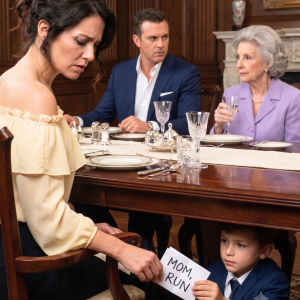
I stopped outside Room 417 at Mercy General Hospital with my hand inches from the door.
Inside, my son Mason laughed.
I had heard that laugh hundreds of times. It was the small, breathy laugh he made whenever he thought he had figured out a problem before everyone else.
“I’m serious,” he said. “I don’t even have to ask twice.”
I stood perfectly still.
There was a lottery ticket folded inside the zippered pocket of my handbag.
Twenty million dollars.
That morning, I had checked the numbers on my laptop, then checked them again on my phone. After the sixth time, I had sat at my kitchen table staring at the ticket until my coffee went cold.
My first thought had been Mason.
His medical bills.
His failing sign-and-print business.
His credit cards.
The rent on his apartment.
All the problems that seemed to arrive at my door whenever his life became difficult.
I had driven straight to the hospital because I wanted to tell my only child that he didn’t have to worry anymore.
Then I heard him talking.
“She already sold some jewelry for me,” Mason said. “And that old sewing machine she was obsessed with.”
My fingers tightened around the strap of my handbag.
The machine had belonged to my grandmother.
A black Singer with faded gold lettering and a wooden case scratched along one side.
I had learned to sew on it when I was twelve.
Three weeks earlier, I had carried it into a pawnshop because Mason said he needed money for his hospital deductible.
I had received $1,900 for it.
Mason never asked where the money came from.
A muffled female voice answered through his phone.
Then Mason said:
“Serena, you know my mother. If I look scared, she panics. If I tell her I might lose everything while I’m sick, she’ll fix it.”
Serena.
I knew the name.
Serena Hale had managed Mason’s business for almost three years before leaving suddenly that spring.
“The shop is drowning,” Mason continued. “I need maybe fifty grand immediately, then another hundred to clean up the cards and vendors.”
Another pause.
“She’ll do it.”
The certainty in his voice was worse than the words.
“She always does.”
A nurse came around the corner pushing a cart.
She slowed when she saw me.
“Mrs. Nickerson? Mason’s mother?”
I nodded.
“He’s awake. You can go right in.”
“Actually, I forgot something downstairs.”
She smiled politely.
“No problem.”
I turned around.
Behind me, Mason was still talking.
I walked to the elevator, pressed the button and waited.
My phone rang before the doors opened.
Mason.
I watched his name appear on the screen.
I didn’t answer.
I was sixty years old.
Mason was thirty-four.
His father left when he was nine, and for most of Mason’s childhood, there were only two people at our dinner table.
I worked alterations at a bridal shop during the day and took private sewing jobs at night. Mason used to fall asleep on the couch while I hemmed bridesmaid dresses at the dining table.
When he needed $4,600 to finish community college, I paid it.
When his first business failed at twenty-eight, he moved back into my house for seven months.
When he opened Nickerson Signs & Print, I gave him $18,000 from the savings account I had been building to replace my roof.
I never called those things sacrifices.
They were simply things I did.
But during the previous two years, Mason’s emergencies had started arriving faster.
A supplier needed payment.
A credit card was overdue.
A machine at the shop broke.
Payroll was short.
His rent increased.
Then came his health problems.
The hospitalization itself was real. Mason had developed complications after a procedure and needed treatment followed by rehabilitation.
But somewhere along the way, every business problem became part of his medical emergency.
“I can’t recover with creditors calling me.”
“Mom, stress is making this worse.”
“If the shop closes while I’m here, what am I supposed to do when I get out?”
And every time, I found money.
That morning, I had believed twenty million dollars meant I could finally stop worrying about finding it.
Instead, I drove home without telling anyone I had won.
A Message Arrived at 9:17 That Night
Mason called six times that afternoon.
He sent three messages.
Where are you?
I thought you were coming.
Then:
Mom, please call me. I really need you.
I left the phone facedown.
At 9:17 that night, another message appeared from a number I didn’t recognize.
Mrs. Nickerson, this is Serena Hale. Please don’t tell Mason about the lottery.
I read it twice.
Then another message arrived.
I know you heard us today. I saw you outside the room.
I sat down at my kitchen table.
How do you know about my ticket?
Serena replied almost immediately.
Because Mason knows.
I stood so quickly my chair scraped across the floor.
The lottery ticket was inside an old recipe box in the cabinet above my refrigerator.
I took it out, carried it into my bedroom and locked it inside the small fireproof safe where I kept my passport and birth certificate.
Then I returned to the kitchen.
What do you want?
Her answer came a minute later.
To show you what he has already done.
We agreed to meet at eight the next morning at a coffee shop near Land Park.
Serena was already there when I arrived.
She looked thinner than I remembered. Her hair was pulled into a loose ponytail, and there were dark circles under her eyes.
A thick manila envelope sat beside her coffee.
I didn’t sit immediately.
“How does Mason know I won?”
Serena looked toward the envelope.
“We need to talk about something else first.”
“No. Answer me.”
She nodded.
“Mason saw the ticket at your house Sunday.”
I remembered.
He had stopped by to pick up a phone charger.
The ticket had been sitting beside a stack of grocery receipts on my kitchen counter.
“He photographed it?”
“Yes.”
“And called you?”
Serena looked uncomfortable.
“He called me because he wanted help figuring out what to do.”
“Do about what?”
She pushed the envelope toward me.
“This.”
I sat down.
Inside were loan applications.
Credit agreements.
Personal guarantees.
Business financing documents.
My name appeared on nearly every page.
Ruby Nickerson.
My address.
My personal information.
My signature.
I stared at the first one.
Then the second.
“I didn’t sign this.”
“I know.”
I turned another page.
“I didn’t sign this either.”
“I know.”
By the fifth document, my hands had started shaking.
“How much?”
Serena didn’t answer immediately.
“How much, Serena?”
“Around six hundred eighty thousand dollars.”
I looked at her.
The coffee shop seemed suddenly too loud.
Someone behind us was grinding coffee beans.
A child was crying near the register.
A man at the next table was tapping on a laptop.
Normal things.
I put both palms flat on the documents.
“Mason borrowed six hundred eighty thousand dollars in my name?”
“Not all directly in your name. Some were business loans where you were listed as guarantor.”
“Without my permission.”
“Yes.”
She pulled out one application.
“I saw him practicing your signature.”
I examined it.
The imitation was good.
The first letter curled exactly the way mine did.
But the final stroke was too straight.
I knew my own name.
“Why didn’t you tell me?”
Serena looked down.
“I should have.”
I waited.
“At first he told me you knew. Later I realized you didn’t. By then I’d already helped prepare some of the paperwork.”
“Did you forge anything?”
“No.”
“Did you know he was doing it?”
She swallowed.
“Eventually, yes.”
That answer was difficult to hear.
But at least it was an answer.
I gathered the documents.
“I need an attorney.”
“I know one.”
That was how I met Carson Wickham.

I Stopped Paying
Carson’s office was on the fifth floor of a building downtown.
He was fifty-eight, gray-haired and quiet.
He spent nearly forty minutes reading before asking me a question.
“Did you sign any of these?”
“No.”
“Did you ever authorize Mason to sign your name?”
“Never.”
He placed the documents into two piles.
“Then we’re going to dispute them immediately.”
“What happens to Mason?”
Carson looked at me over his glasses.
“Ruby, right now you need to decide what happens to you.”
That sentence stayed with me.