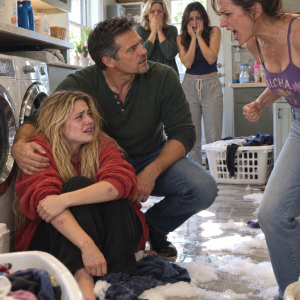
MY HUSBAND BROUGHT HIS PREGNANT MISTRESS TO THE NICU AND FORCED ME TO SIGN DIVORCE PAPERS — THEN MY GRANDFATHER WALKED INTO THE HOSPITAL HE OWNED
Part 1: The Divorce Papers Beside My Newborn Twins
Two days after nearly dying while giving birth to premature twins, I watched my husband enter the neonatal intensive care unit holding hands with his pregnant mistress.
She was wearing my ivory cashmere maternity coat.
The same coat he’d given me when we discovered I was expecting twins.
My name is Julia Reed, and I was still recovering from emergency surgery when my marriage ended beside two incubators in a Baltimore hospital.
My babies, Oliver and Lucy, had arrived at just twenty-nine weeks.
Their lungs were underdeveloped, their bodies frighteningly small, and every breath depended on specialized equipment and constant medical supervision.
Doctors had spent hours controlling my hemorrhage.
When I regained consciousness, I hadn’t asked about my husband or my own condition.
I’d asked whether my children were alive.
Nurse Sarah Collins had squeezed my hand.
“Both babies are receiving intensive treatment, Julia, and our team is doing everything possible to support them.”
For two days, I’d barely slept.
Every alarm made my heart race, and every medical update seemed capable of changing my entire world.
That morning, Sarah had helped me into a clean hospital gown and wheeled me beside the incubators.
Oliver’s tiny hand rested near his chest.
Lucy slept with her fingers slightly open.
I was watching them when a familiar voice interrupted the quiet.
“Julia, we need to talk.”
I turned my wheelchair.
My husband, Graham Reed, stood near the entrance beside Vanessa Brooks, the administrative assistant he’d hired eight months earlier.
Vanessa was visibly pregnant.
She smiled while smoothing the sleeves of my coat.
“This is beautiful, isn’t it? Graham said you wouldn’t need it anymore.”
Inside its collar, I’d stitched Oliver’s and Lucy’s initials after receiving the coat as a gift.
I looked toward Graham, waiting for an explanation.
Instead, he placed a folder on my lap and balanced a pen across it.
“Sign these papers, Julia. There’s no reason to drag things out any longer.”
I opened the folder.
It contained a divorce agreement.
“Our children were born two days ago, Graham, and the doctors still don’t know when they’ll breathe independently.”
He folded his arms.
“Vanessa is pregnant, and we’re starting a family together. I need this marriage finished.”
I stared at him.
“What about the family you already have?”
He shrugged.
“You’ll figure something out.”
Then he explained that he’d emptied our joint accounts, blocked my access to the credit cards, and claimed the apartment, vehicles, and company for himself.
He’d even included language attempting to deny me meaningful financial support.
I looked down at the documents.
Lucy’s name was misspelled.
My husband had apparently been too busy abandoning his children to write his daughter’s name correctly.
Part 2: The Signature He Thought Meant Surrender
Graham and I hadn’t always been strangers.
We met while working for a small consulting firm, shortly after I completed my studies in healthcare administration.
He dreamed of establishing his own company, and I believed we could build something worthwhile together.
We lived modestly in those early years.
We shared inexpensive meals, drove used cars, and spent evenings developing business proposals around our kitchen table.
When Graham decided to launch his company, I contributed my personal savings.
I also managed bookkeeping, prepared budgets, negotiated with suppliers, and introduced him to contacts who helped the business expand.
He held the chief executive title.
I never objected because I believed we were partners.
When I became pregnant, we agreed I’d reduce my responsibilities temporarily.
Graham began coming home later, hiding telephone conversations, and accusing me of being suspicious whenever I asked ordinary questions.
I blamed exhaustion and business pressure.
Meanwhile, he was building an entirely different future with Vanessa.
Standing beside my wheelchair, he seemed impatient rather than ashamed.
“Julia, we don’t have all day. Read what you need to read and sign it.”
I turned another page.
The agreement purported to give him nearly everything accumulated during our marriage.
It assigned the apartment and vehicles to him and contained sweeping assertions about the company’s ownership.
It also attempted to limit my ability to pursue financial claims.
I knew enough about administration and contracts to recognize how unreasonable it was.
But I was physically exhausted, frightened for my children, and desperate to end the confrontation.
I picked up the pen.
Sarah moved toward us, concerned by the rising voices.
I shook my head slightly, signaling that I understood she was nearby.
Then I signed.
Page after page.
Vanessa laughed softly.
“Well, that was easier than I expected.”
Graham collected the folder.
“At least you’re finally being sensible. You’ll need to find somewhere else to live once you’re discharged.”
I looked up.
“Are you finished?”
“Completely. And don’t expect me to keep paying hospital bills indefinitely.”
He began walking toward the door.
“Maybe you should start calling homeless shelters and see whether somebody can take you in.”
I reached for my phone.
“I won’t be calling a shelter, Graham. I’m calling my grandfather.”
He stopped.
Vanessa’s smile disappeared.
I selected a contact I had known by heart since childhood.
The call connected almost immediately.
“Julia, sweetheart, how are you feeling?”
Hearing my grandfather’s voice nearly broke my composure.
“Grandpa, could you come to the neonatal intensive care unit at Caldwell Memorial Hospital? Graham has just forced me to sign divorce papers, emptied our accounts, and told me the babies and I have nowhere to go.”
His voice changed.
“Are Oliver and Lucy safe?”
“They’re receiving treatment, but they’re still critically premature.”
“I’ll come immediately.”
I swallowed.
“Please bring the hospital’s security director. I need the children protected from any more disruption.”
He agreed.
Before ending the call, I added something Graham had never known.
“Grandpa, I think someone has forgotten that Oliver and Lucy are your great-grandchildren, and that we’re receiving treatment in one of the hospitals your medical foundation established.”
Graham turned slowly.
“What did you just say?”
I set down the phone.
For the first time that morning, I wasn’t afraid of his reaction.
Part 3: The Man Who Founded the Hospital

My grandfather, Dr. Franklin Caldwell, was seventy-nine years old.
He began his career as a surgeon before establishing a respected network of hospitals and medical research institutions across the United States.
Caldwell Memorial was one of them.
But Graham had never connected my family background with the medical foundation bearing my grandfather’s name.
After marriage, I’d used Graham’s surname.
I’d also deliberately avoided using my grandfather’s connections to advance my own career.
When Graham and I met, I lived in a small apartment and drove a secondhand car.
I wanted him to love the woman I was, not the resources my family possessed.
Grandpa respected my independence, although he sometimes questioned whether I’d confused self-reliance with isolation.
Related Posts
At 5:03 A.M., My Father Broke Into My Apartment, Shouting, “Keep Paying Us Or Lose Everything!” After I Stopped Sending $900 A Month, He Called Military Police And Accused Me, A U.S. Army Staff Sergeant, Of Being Unstable—But What They Found Beneath My Sofa Was Only The Beginning.

“We Gave Your $4,200 Christmas Cruise Cabin to Your Sister—Her Kids Have a Father,” My Mother Texted Just Two Hours Before Boarding. Then My Dad Sent Me a $3,850 Bill for Their Luxury Excursions. I Looked at My 8-Year-Old Twins Standing Beside Their Suitcases and Quietly Took Them Home. But While My Family Enjoyed Ten Days at Sea, I Called an Attorney, Challenged the Charges, and Cut Off the Financial Support They’d Relied on for Years. By the Time They Returned, the Luxurious Life I’d Been Funding Was Already Falling Apart
😡 “MOM LEFT ME THE $7 MILLION BEACHFRONT MANSION, AND YOU GOT THAT ROTTEN OLD SHACK! GUESS SHE KNEW WHO DESERVED MORE!” My Daughter Sneered Just Three Weeks After My Wife’s Funeral. 💔 Her Husband Laughed, “YOU’RE 71, ROBERT! STOP ACTING LIKE YOU HAVE ANYTHING LEFT TO OFFER. FIND YOURSELF A NURSING HOME!” I Didn’t Give Them The Satisfaction Of Seeing Me Cry. I Packed Two Suitcases And Drove Four Hours To The Cabin My Wife Had Left Me. But The Moment I Stepped Inside, I Stopped Cold. 😨 On The Table Was A Blue Envelope In My Late Wife’s Handwriting. The First Line Read: “ROBERT, THERE’S SOMETHING ABOUT OUR DAUGHTER YOU NEED TO KNOW…”

“You’ll Take Care of All Five Kids,” My Mother Announced When My Brother Revealed His Wife Was Pregnant Again. After Eight Years of Supporting His Family With Over $118,000, I Finally Said No. My Sister-in-Law Sneered, “You Don’t Have a Real Family Anyway. You Should Be Grateful We Include You.” I Walked Out Without Another Word. But at 7:18 the Next Morning, the Police Called—and Revealed What My Brother Had Secretly Been Doing in My Name…