The day we buried my grandfather, the sky felt stretched tight—heavy and gray, like it had taken my grief and spread it across the clouds.
I stood motionless by his casket, accepting cold condolences from strangers who barely knew me. They touched my shoulder like I might shatter. Only Grandpa Ezra had ever truly seen me—not out of duty, but because he cared. He listened. He was there.
My mother, Lenora, was always elsewhere, busy with causes and phone calls. My father had long since vanished into alcohol, and Marianne, my sister, was a master of quiet bitterness. But Ezra? He loved me unconditionally.
After the service, the church air hung heavy with old hymns and stale coffee. I barely noticed the people murmuring around me—my thoughts were still with Ezra, trying to hold onto the feeling of that last goodbye.
Then my mother appeared beside me.

“Rhys,” she said sharply. “Come here a moment.”
She led me away from the others to a quiet corner near a stained glass window.
“You did well with Grandpa,” she began, adjusting her perfect sleeve. “I heard he left you the house. That was… generous.”
“Yeah,” I replied. “He wanted me to have it.”
Her tone shifted. “You need to sign it over to Marianne. She has kids. You’ll buy another house someday.”
I stared at her. “If Grandpa wanted her to have it, he would’ve said so.”
Her smile dropped. Her voice turned cold. “You don’t really have a choice—not if you want certain family truths to stay buried.”
I didn’t flinch. I already knew what she meant. But instead of arguing, I simply said, “I’ll think about it.”
The calls started the next day—first sweet, then demanding. Marianne sent pictures of her kids with captions like, “They’d love a garden to play in!”
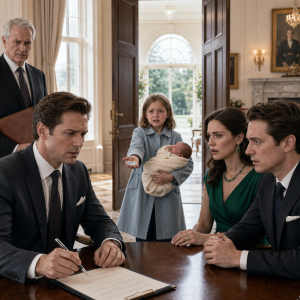
Eventually, I received a legal envelope: a lawsuit.

My mother claimed I wasn’t biologically Ezra’s grandson. That during her marriage, she’d had an affair. So the house, she argued, belonged to Marianne—the “real” descendant.
I wasn’t shocked. Just insulted.