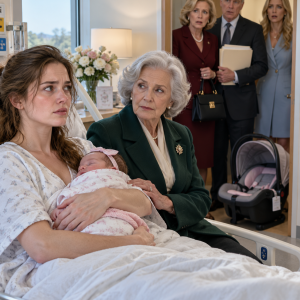
“Mara, I need to speak with you without this entire audience watching us,” Grant said.
“The audience approved your authority, repeated your claims, and watched your engagement,” Mara replied. “They should also hear your explanation.”
Grant looked around the table for someone willing to rescue him from the facts. “I made aggressive decisions because the acquisition would have doubled our diagnostic network. Once the deal closed, the pledged shares would have been released, and Mara could have returned whenever she was ready.”
“You announced that I had permanently stepped away,” Mara said. “You also told investors that my condition made leadership unsafe.”
“The market required certainty, and you were unavailable to provide that reassurance personally.”
Camille interrupted him with visible bitterness. “You told me Mara could no longer read for more than ten minutes, and you said the doctors expected permanent cognitive limitations.”
Grant’s face tightened. “I told you what was necessary to keep the transaction moving.”
Mara felt anger rise with unusual clarity. Her husband had not merely exploited her injuries; he had rewritten them into a convenient incapacity, then distributed that fiction until her own company regarded her survival as a governance problem.
Natalie placed a resolution before the directors that suspended Grant, Camille, and two finance officers, restored Mara’s executive authority, and commissioned an independent investigation. Every director voted in favor, including those who had supported Grant’s transition plan.
“You cannot remove me because I acted during an emergency,” Grant said.
“The emergency was not my accident,” Mara replied. “The emergency was your belief that my absence transferred ownership of my life.”
Part 4 – The Woman Who Had Saved Everything

As security moved toward Grant, Camille asked for permission to speak with Mara and Natalie. Grant ordered her to remain silent, but Camille opened her handbag and removed an encrypted drive along with a printed agreement bearing Grant’s signature. The agreement promised her the chief executive position after the Silver Pine acquisition, a five-percent equity award from shares Grant did not own, and a personal trust that would become effective after his divorce.
“He insisted that we protect ourselves with records,” Camille said. “He believed everyone eventually betrayed everyone else, so I kept copies of the messages, audio notes, payment schedules, and drafts he ordered me to delete.”
Grant stepped toward her before security blocked him. “You were involved in every decision, so do not perform innocence because the room has turned against us.”
Camille did not deny it. “I knew the engagement announcement was cruel, and I knew the consulting arrangement was structured to avoid scrutiny. I did not know the medical proxy was forged, and I did not know he was still presenting himself to Mara as a devoted husband.”
“You understood enough to accept his ring and stand beside him publicly,” Mara said.
“Yes, and I wanted the title badly enough to believe whatever protected my ambition,” Camille replied. “That does not excuse me, although it may help prove what he planned.”
The drive contained messages describing Mara as an obstacle to be managed until the acquisition transferred control. One recording captured Grant saying he intended to become the name investors remembered first.
When Natalie played the recording, Grant stopped arguing about strategy and began speaking about humiliation. “I spent two decades standing beside someone who owned every room before I entered it,” he said. “No matter what I accomplished, people treated me as an accessory to her intelligence.”
Mara studied the man she had once trusted with every vulnerable part of her ambition. “I introduced you as my partner, defended your promotions, and gave you authority that other directors had to earn through years of results.”
“That was the problem, because everyone knew the authority came from you,” Grant replied. “I wanted something that belonged to me without your permission.”
“Then you should have built something,” Mara said. “Instead, you tried to rename theft as independence.”
Grant’s anger finally overcame his performance. “You will destroy the company if you turn this into a criminal spectacle.”
“The company survived my accident, and it will survive your investigation,” Mara replied. “What it cannot survive is leadership that treats trust as unsecured capital.”
Security escorted him from the room while he continued calling Mara’s name with the outrage of someone discovering that access could be revoked. Camille remained behind and signed a cooperation agreement that froze her compensation, suspended her position, and required full disclosure to investigators.
Before dawn, the board restored Mara as executive chair and announced an independent review. The statement omitted the engagement, yet everyone understood that the misconduct and romance belonged to the same design.
Part 5 – What the Company Remembered
The market reacted violently when trading opened, although the decline slowed after Mara held an investor call and answered questions without hiding behind public relations language. She acknowledged governance failures, confirmed that liquidity remained sufficient, and promised that the Silver Pine acquisition would remain suspended until every advisory contract had been examined. By the end of the week, the stock had recovered most of its losses because uncertainty had been replaced with facts.
The divorce filing became public, and reporters described Mara as ruthless and unforgiving, as though protecting her property required a psychological diagnosis. Mara refused interviews about the marriage and spoke only about the investigation, employee stability, and patient obligations. She had founded Hartwell Pierce Medical to improve diagnostic access in smaller communities, and she would not allow Grant’s vanity to turn the company into a monument to private revenge.
The forensic review uncovered additional expense accounts, undisclosed gifts to lenders, and a property purchased through a shell company for Grant and Camille. Camille’s cooperation reduced her exposure, although she resigned permanently and later testified that Grant had designed the false medical narrative himself. Two finance officers admitted that they had questioned the proxy but accepted Grant’s assurance that marital authority made formal consent unnecessary.
Grant sent Mara a handwritten letter through their attorneys several months later. He wrote that admiration had gradually become resentment, that resentment demanded proof of his importance, and that the engagement was intended to create a future in which nobody introduced him through his wife. He asked her to remember the younger man who had slept on an office floor while she prepared the company’s first regulatory submission.
Mara read the letter twice because memory deserved accuracy, even when forgiveness was impossible. She remembered when they believed shared struggle guaranteed shared character. She also remembered that love did not invalidate evidence, and history did not create a permanent license to cause harm.
“Please place the letter with the personal records, not the litigation file,” she told Natalie. “It is not evidence of innocence, but it is evidence of who he became.”
Within eight months, the company completed a governance overhaul that separated marital relationships from corporate authority, required independent verification of medical incapacity, and prevented founder shares from being pledged through proxy instruments. Mara ended the Silver Pine acquisition and redirected part of the reserved capital into a rural diagnostic initiative serving communities the original deal had ignored.
At the annual meeting, shareholders approved a new name, Hartwell Meridian Health, removing the old partnership structure that Grant had used to portray himself as an equal founder. Ethan remained on the board but declined to place his surname in the title.
“You built the first map, and the rest of us should help keep it honest,” he told Mara after the vote.
Part 6 – The Journey She Chose Alone
The following spring, Mara finally used one of the destinations from the travel folder she had abandoned at the engagement celebration. She booked a room in Santa Fe under her own name, carried no corporate entourage, and left her wedding ring in a bank envelope with the remaining marital property. On her first morning, she walked through streets washed with desert light among strangers who knew nothing about what she had lost or recovered.
Grant had once promised that a week away would make them forget the years consumed by boardrooms. Mara now understood that forgetting had never been the goal, because memory allowed a person to recognize patterns before they became cages. She remembered the applause welcoming her replacement and the boardroom where documents finally spoke louder than charm.
Her phone vibrated with a message from Ethan confirming that the rural initiative had opened its first mobile clinic. Another message from Natalie reported that Grant had accepted a civil settlement and entered a plea agreement on charges related to falsified authorization and financial misrepresentation. Mara read both messages, then turned the phone off before continuing toward the plaza.
She stopped beside a courtyard where a musician played an old guitar beneath cottonwood branches. Mara had learned that freedom did not require pretending the past contained nothing valuable; it required refusing to let valuable memories negotiate away present truth.
For the first time since her accident, she walked without checking whether anyone was following her pace. The company was secure, the investigation was nearly complete, and the life ahead did not need to be explained through Grant’s regret. She crossed the sunlit plaza alone, not because no one had chosen her, but because she had finally chosen a future that could not be pledged, transferred, or announced without her consent.
THE END