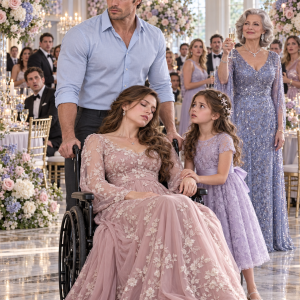
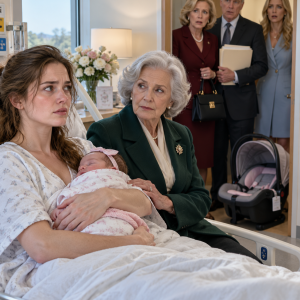
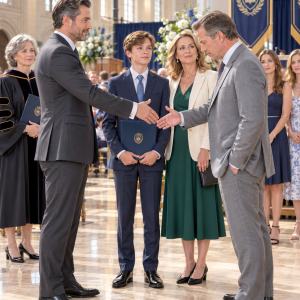
The board approved the change three weeks later, and Victoria became chief executive of Northstar Technologies.
Her first months were not triumphant in the simple way reporters expected. The company faced damaged morale, threatened contracts, lawsuits, and skeptical investors. Victoria refused to present herself as a heroic replacement for one corrupt leader.
She hired an independent ethics officer, strengthened board oversight, and separated executive compensation from unchecked personal authority. Employees who had been silenced received protected channels to report abuse.
Northstar stabilized gradually.
The most important recovery occurred outside the company.
Victoria sold the penthouse because she could not imagine living again in rooms where fear had become routine. She used much of the proceeds to establish a nonprofit providing emergency housing, legal assistance, counseling, and employment support for women experiencing domestic coercion.
She named it the White Orchid Initiative.
At the opening event, a journalist asked whether orchids seemed too delicate for an organization focused on survival.
Victoria answered without hesitation.
“Fragility is often assigned to things people have not bothered to understand. Orchids survive difficult environments through adaptation, patience, and strong roots. So do women rebuilding their lives.”
The broken flowers from the night of the assault no longer represented weakness. They marked the last evening she had accepted Graham’s definition of her.
Her relationship with Charles also required rebuilding. Their reunion did not erase years of pride and silence.
During family therapy, Victoria told him that his decision not to contact her directly had made Graham’s lies easier to believe.
“I needed you to fight harder for me,” she said.
Charles accepted the criticism.
“I told myself I was respecting your autonomy, but part of me was also protecting my pride after you rejected my warning. I should have found a way to remind you that the door remained open.”
Eleanor admitted she had allowed Charles to manage communication because confrontation frightened her.
None of them used Graham’s manipulation to avoid examining their own failures.
They learned to call, ask, and answer directly.
Part 6 – The Trial Without His Carefully Built Image
Graham’s criminal trial began nine months after the assault and attracted national attention.
He entered court wearing a conservative suit that could not restore the charismatic image once presented in business magazines. Without company assistants, private drivers, and carefully managed press appearances, he looked smaller than Victoria remembered.
Vanessa testified for the prosecution and confirmed the affair, the financial scheme, and Graham’s plan to portray Victoria as mentally unstable. Former employees described harassment, retaliation, and falsified business records.
The most powerful evidence remained the penthouse video.
Victoria did not watch it again. She had already lived it.
Her medical records, the weapon analysis, building surveillance, and Graham’s messages eliminated the possibility of an accidental injury. A former housekeeper testified that she had seen older bruises and once heard Graham threaten Victoria after a dinner party.
Before sentencing, Graham requested a private meeting.
Victoria refused.
He sent a handwritten letter claiming that fear of losing her had caused him to lose control.
She read the first paragraph, then placed the letter in the recycling bin.
Fear did not transform violence into love.
Possession was not devotion.
Facing overwhelming evidence, Graham accepted a plea agreement involving a substantial prison sentence, restitution, permanent protective orders, and a prohibition against serving as an officer of a publicly traded company.
Civil judgments eliminated most of his remaining wealth and company interests.
As officers led him toward the transport vehicle, photographers called his name. He had once enjoyed entering rooms where people admired or feared him.
Now nobody saw a visionary founder.
They saw the consequences of choices he had spent years convincing himself were privileges.
Part 7 – The Word That Opened The Door

The following spring, Victoria walked beside her father through the gardens of the Hale family estate near Newport, Rhode Island. Her arm had regained most of its strength, although several faint scars remained along her wrist.
Northstar’s quarterly report showed steady growth, restored contracts, and improved employee retention. The White Orchid Initiative had opened its second secure residence and helped dozens of women obtain legal representation.
Charles sat beneath an old magnolia tree overlooking the water.
“The board is pleased with the quarter,” he said.
“I saw the report. We still have work to do, but the direction is right.”
He smiled.
“You sound like a chief executive.”
Victoria looked toward the terrace, where Eleanor arranged tea beside a vase of fresh flowers.
“For years, I believed taking back the company would become the greatest victory of my life.”
“What changed?”
“I realized the greatest victory happened before any board meeting. It happened when I called you.”
Charles lowered his gaze.
“I wish you had called earlier.”
“So do I. I also wish you had called differently, and I wish I had answered the letters instead of believing what Graham told me.”
“We cannot repair the years, but we can refuse to repeat the silence.”
Victoria rested her head briefly against his shoulder.
After several minutes, she remembered something.
“When you answered that night, you only said ‘Hale speaking.’ You sounded colder than I remembered.”
Charles laughed softly.
“A terrible habit from decades of business calls.”
“I was afraid you would not recognize me.”
His expression became serious.
“I recognized your breathing before you said a word.”
Victoria looked at him.
“How?”
“Because a parent remembers the silence that comes before a child asks for help, even after many years apart.”
Tears filled her eyes, although they no longer carried shame.
Graham had believed isolation made her powerless. He assumed that estrangement meant abandonment and that violence would force her deeper into silence.
He misunderstood both her family and her strength.
Victoria had not needed a perfect rescue, an untouched reputation, or a life without regret.
She needed one honest moment in which fear no longer controlled her hand.
She pressed a familiar name on a phone screen and spoke a single word.
“Dad.”
That word did not destroy Graham’s empire by itself. Evidence, law, courageous witnesses, and years of hidden truth accomplished that.
However, the word opened the first door.
Through that door came safety, accountability, reconciliation, and the return of a voice Graham had spent years trying to erase.
Victoria did not become whole because her father was powerful.
She became whole because she finally believed she deserved to ask for help and remain heard after asking.
The company she rebuilt carried a new name.
The foundation she created protected new lives.
The home she returned to no longer required silence as the price of belonging.
Graham had attempted to teach her that fear was stronger than truth.
Her life afterward proved the opposite.
THE END