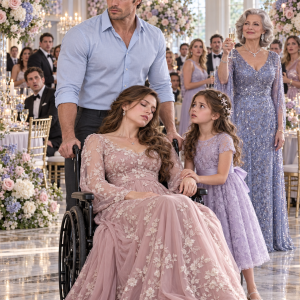
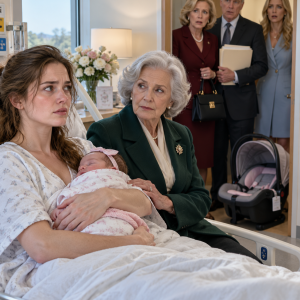
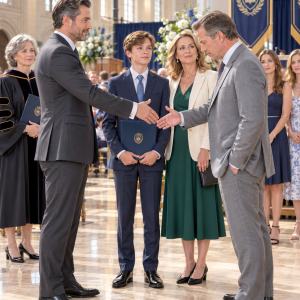
The vote failed.
Harrington Capital threatened litigation, but its lenders withdrew after receiving the accurate environmental and title reports. Without financing, the redevelopment collapsed.
Nathaniel publicly blamed me for endangering the company. The independent directors responded by placing him on administrative leave while a special committee reviewed the altered valuations, undisclosed conflicts, and misuse of my signature.
Celeste ended their relationship within forty-eight hours of her father withdrawing support.
Nathaniel called me that night.
“She never mattered the way you think.”
“That does not improve anything.”
“We can still protect each other.”
“You mean I can still protect you.”
He remained silent.
For the first time, silence served me rather than him.
Part 6 – The Boardroom Without His Chair
Three months later, Mercer & Vale held an emergency shareholder meeting inside its headquarters overlooking the Delaware River.
Nathaniel arrived with attorneys and attempted to occupy the chairman’s seat. The independent director asked him to sit elsewhere because he remained suspended.
I entered with Samuel, Renee, Owen, and Eleanor.
Several executives looked surprised to see my mother-in-law beside me. She did not touch my arm or perform an affection we had never shared, but her presence communicated a choice she should have made years earlier.
Forensic accountants presented their findings.
Nathaniel knowingly signed inaccurate financial statements, concealed title disputes, and used marital access to obtain my signature on a property transfer whose effect he never explained. He also negotiated personal benefits from Harrington while presenting the deal as necessary for company survival.
William Harrington denied directing the misconduct, but emails showed that his team understood Mercer & Vale would probably default after closing.
The board voted to remove Nathaniel as chief executive and refer the findings to regulators.
He stood suddenly.
“This company would not exist without me.”
Owen answered from across the table.
“It would not exist without Margaret’s money, Claire’s property rights, employee labor, and the many people you trained yourself to overlook.”
Nathaniel turned toward me.
“Is this what you wanted?”
Months earlier, I might have wanted him to experience the humiliation he designed for me. Sitting there, I felt no pleasure.
“I wanted the truth before another person signed something you had chosen not to explain.”
The board restored misdirected income to the original trust and created an independent preservation subsidiary. I retained Margaret’s voting interest but declined the chief executive role several directors offered.
Instead, I required professional management, transparent audits, tenant protections, and environmental review before future redevelopment.
Owen accepted temporary leadership under those conditions.
Nathaniel left through a side entrance.
No reporters waited there because the board refused to turn accountability into spectacle.
Part 7 – The Divorce He Could Not Control

The divorce proceedings lasted another six months.
Nathaniel attempted to classify the company interest as separate property while arguing that my inherited shares should remain outside any discussion of his misconduct.
Renee demonstrated that he had used marital funds, concealed income, and prepared the anniversary settlement to prevent examination of disputed assets.
The court did not award me everything, nor did I want everything.
I received my lawful share of marital property, restitution connected to unauthorized income, and full protection from company liabilities created without my informed consent.
Nathaniel kept assets that legitimately belonged to him, although their value had fallen after his removal.
The judge invalidated several provisions of the original settlement and referred the signature issue for separate investigation. Nathaniel eventually entered a civil agreement acknowledging that I had not received accurate disclosure when signing the Walnut Street document.
Outside the courthouse, he asked to speak privately.
Renee remained several feet away.
“Did you ever love me?” he asked.
The question might once have broken me.
“I loved the person I believed you were. I also loved you during years when the evidence should have changed my mind.”
He looked older than forty-two.
“Margaret turned you against me.”
“Margaret gave me information. Your choices determined what the information meant.”
“I lost everything.”
“You lost control of things you believed nobody else deserved to understand.”
He waited for comfort because I had supplied it throughout our marriage.
I gave him none.
Part 8 – The House With Open Curtains
One year after Margaret’s death, Walnut Street House reopened as the Alden-Bellamy Center for Care and Preservation.
The first floor provided legal and financial counseling for family caregivers who had left careers or depleted savings while supporting relatives. Upper rooms housed training programs for nurses, home health aides, and preservation workers maintaining accessible historic properties.
I used part of Margaret’s inheritance to establish the center, while the restored property trust funded operations without depending entirely on annual donations.
A framed photograph of Margaret stood near the library window. She wore her pale green cardigan and pearl earrings, looking directly at the camera with the impatient dignity that had survived age, illness, and other people’s tendency to dismiss her.
Beneath the photograph hung one sentence from her letter.
You asked whether I wanted the curtains open.
Eleanor attended the opening but remained near the back. Our relationship had not transformed into sudden closeness. Apologies could begin repair, but they could not erase ten years of deliberate contempt.
She approached after the guests left.
“Margaret would approve.”
“She would find three things to criticize before admitting it.”
Eleanor smiled faintly.
“That sounds accurate.”
We stood together without pretending we had become family in the way either of us once understood that word.
Owen later joined me on the front steps. Under independent leadership, Mercer & Vale survived, although it abandoned the Harrington project and sold several speculative assets. The company was smaller, more stable, and no longer organized around Nathaniel’s image.
“Do you regret keeping the shares?” he asked.
“Sometimes. Then I remember that walking away would have allowed the same system to continue with a different face.”
That evening, I opened every curtain in Walnut Street House before locking the doors.
For years, I believed devotion meant staying available, remaining patient, and accepting that other people possessed more important ambitions. Margaret understood before I did that care had value precisely because powerful people depended upon it while pretending it cost nothing.
Nathaniel chose our anniversary because he believed memory would weaken me. Instead, the date exposed the first signature he had taken through trust and the final signature he would never receive.
I did not inherit a perfect life from Margaret.
I inherited the right questions, the documents that answered them, and enough authority to ensure that nobody could bury those answers again.
THE END