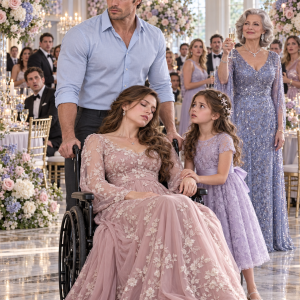
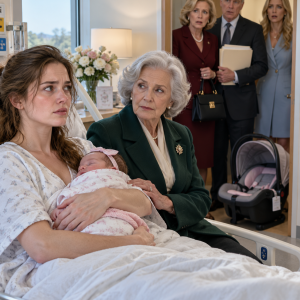
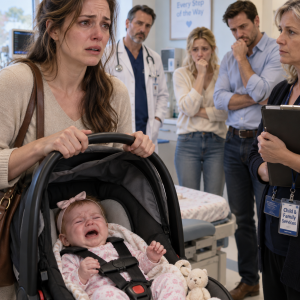
Sabrina had selected Gavin because his desire for fatherhood made him easy to manipulate.
During a joint interview, Lorraine turned toward her.
“You brought strangers’ children into my son’s home and expected me to raise them as heirs.”
Sabrina laughed bitterly.
“Your family was destroyed before I arrived. I only found a vain man willing to believe any story that made him feel important.”
Gavin attempted to blame both women.
He described himself as emotionally manipulated, medically impaired, and misled about the children.
The financial records told another story.
He had approved withdrawals, hired a physician willing to prepare a false capacity evaluation, and drafted board resolutions transferring temporary authority from me to himself.
His messages described plans to remove me from the penthouse, isolate me from executives, and announce that stress had caused a psychological collapse.
One message to Sabrina read:
Once she is declared incapable, nobody will question why I am acting for her. People already think powerful women eventually break.
That sentence became one of the prosecution’s central pieces of evidence.
Part 6 – The Company He Never Owned
Gavin hired a public-relations firm and announced that I had orchestrated the investigation to avoid sharing marital wealth.
He appeared at a press conference wearing a medical bracelet and described himself as another victim of Lorraine’s poisoning.
He accused me of hiding assets, manipulating DNA tests, and using prosecutors to settle a domestic dispute.
I did not respond through insults.
The following morning, I gathered HarborStone employees, vendors, union representatives, lenders, and journalists inside the company’s Baltimore operations center.
My general counsel presented the ownership structure.
Every HarborStone share remained inside an asset-protection trust established four years before my marriage. Industrial properties were held through separate entities with independent directors. The prenuptial agreement specifically excluded Gavin from ownership, voting authority, and future appreciation.
He had received household support, travel privileges, and consulting compensation for occasional public events.
He had never owned HarborStone.
We also disclosed the unauthorized transfers he made through our joint expense account and evidence that he attempted to use company vendors to pay Sabrina’s debts.
“This investigation is not a conflict over who deserves my company,” I told the room. “The legal documents settled that question before my marriage. This is an investigation into attempted poisoning, fraud, coercive control, and the misuse of trust.”
Reporters asked whether I intended to resign because of my health.
“My physicians expect substantial recovery because the exposure was identified before irreversible organ failure. Independent executives have already managed daily operations during treatment, exactly as responsible governance requires.”
HarborStone’s board passed additional protections that afternoon. No spouse, relative, or personal adviser could receive operational authority without independent review.
The company continued functioning because its future had never depended entirely upon my marriage or my physical presence.
Gavin’s public campaign collapsed after his attorneys received the discovery evidence.
The press conference he intended as a rescue became another documented example of false statements.
Part 7 – The Verdicts They Built For Themselves

The combined state and federal proceedings lasted eighteen months.
Lorraine faced charges connected to the attempted murder against me and the historical killing of Thomas Prescott. Prosecutors used the old letters, chemical purchase records, preserved medical samples, property motives, and her recorded admissions.
She received a sentence of twenty-six years.
Sabrina pleaded guilty to conspiracy, financial fraud, document falsification, attempted exploitation of an impaired adult, and participation in the poisoning plan. Her cooperation reduced the sentence to thirteen years.
Gavin was convicted of conspiracy, wire fraud, domestic violence, theft, falsifying corporate records, and attempting to obtain control of protected assets through fraudulent medical evidence.
He received eleven years and substantial restitution obligations.
During sentencing, he turned toward me.
“Eleanor, I did love you once.”
I studied the man who had praised my hands, slept beside me, and later helped transform my illness into an acquisition plan.
“You loved the life my work purchased. The moment you believed you could own that life without me, your affection became unnecessary.”
He looked down.
I felt no triumph.
Justice did not restore my fertility, remove the years of exposure, or create the family I once imagined. It established responsibility and prevented them from repeating the same harm.
That was enough.
My health improved gradually. The liver damage stabilized, although doctors warned that full recovery would require years of monitoring.
I accepted the uncertainty without allowing it to become another form of captivity.
Part 8 – The Harbor House Initiative
One year after the final sentencing, I moved out of the penthouse.
I could have returned permanently after investigators released it, but the rooms contained too many memories of surveillance, false tenderness, and carefully measured poison.
Instead of selling the property, I transferred it to a nonprofit called Harbor House.
The residence became transitional housing for young adults leaving foster care at eighteen. HarborStone funded vocational training, financial counseling, mental-health support, and paid apprenticeships in logistics, engineering, welding, and construction management.
I also created the Foundry Hands Scholarship for students who had grown up without stable families but demonstrated commitment to technical education.
At the opening ceremony, a nineteen-year-old woman named Maya asked whether I had truly begun by delivering breakfast to construction crews.
“Breakfast, replacement gloves, water, and whatever else fit inside an unreliable van,” I answered.
“Can someone really build that much without having anybody?”
I looked toward Marcus, Leah, my executives, warehouse workers, and the young people exploring their new rooms.
“There will be periods when you have almost nobody,” I said. “However, having no relatives beside you does not mean you are destined to remain alone. Family can be built from people who protect your freedom instead of treating your life as property.”
That evening, I stood on the balcony overlooking Baltimore Harbor.
My hands still carried calluses. A faint scar crossed one palm from a warehouse accident decades earlier. Those hands had loaded vans, signed contracts, built a company, preserved evidence, and opened a door for young people who understood what it meant to leave childhood without a permanent home.
I had not recovered the family I believed Gavin gave me because that family had never existed.
What I recovered was the right to decide who could enter my life, influence my work, and sit at my table.
The greatest victory was not keeping HarborStone or watching prison doors close.
It was surviving long enough to transform a home prepared for my disappearance into a place where other people could begin.
THE END