Part 1 — When The Sleeping Heir Spoke
“Do Not Trust Carter.”
The words were so faint that I first thought the old house had made them. Wind moved against the windows of Prescott House, pushing winter rain across the glass, and the medical monitors beside Nolan Prescott’s bed continued their soft, steady rhythm as if nothing impossible had happened.
Then his fingers tightened around mine.
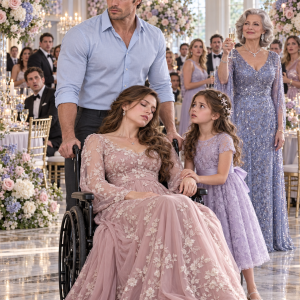
Nolan had been my husband for less than twelve hours. He had also been unconscious for nearly eight months, lying in a private medical suite inside his grandmother’s Hudson Valley estate while lawyers, doctors, trustees, and relatives spoke about him as though his silence had become a permanent legal condition. That morning, in a chapel filled with white roses and expensive restraint, I had married him because my father’s debts were crushing us, because the Prescott family needed a wife named before Nolan’s thirtieth birthday, and because I had been told the arrangement was a private act of mercy for a dying man.
Now the dying man had opened his eyes and warned me about his cousin.
“Nolan?” I whispered, leaning closer.
His lashes trembled. His gaze moved toward me with difficulty, but there was recognition in it, not confusion. A weak sound left his throat, and the heart monitor began to quicken.
I reached for the call button, but his hand held my wrist with surprising intention.
“Wait,” he breathed.
“You Need A Doctor.”
“Not Carter.”
Every word seemed to cost him something. His face was pale, thinner than the wedding portrait displayed downstairs, but his eyes carried a desperate clarity that made fear rise through me.
“I Will Not Call Carter,” I promised. “But I Am Calling The Nurse.”
His grip loosened. Just before his eyes closed again, he whispered one more word.
“Mara.”
My name.
No one had introduced us while he was awake. No one in that room had said my name aloud except me, hours earlier, when I had sat beside him after the ceremony and told an unconscious stranger that I was sorry both our lives had become paperwork.
The alarm on the monitor sharpened. I pressed the button and shouted for help. Nurse Dana Ellis rushed in first, followed by two medical aides and Dr. Arjun Singh, the neurologist hired by the family to supervise Nolan’s recovery without sending him back to the hospital.
“He Opened His Eyes,” I said quickly. “He Spoke To Me.”
Dana checked his pulse, then bent over him. “Mr. Prescott, Can You Hear Me?”
There was no answer.
Dr. Singh examined his pupils, his reflexes, and the monitor readings. His professional calm did not erase the fact that his hands moved faster than before.
“Exactly What Did He Say?” he asked.
I hesitated. Nolan’s warning had not sounded like delirium. It had sounded like the one message he had spent eight months trying to deliver.
“He Said My Name,” I answered. “Then He Lost Consciousness Again.”
Dana looked at me for half a second too long. Before she could speak, the bedroom door opened and Evelyn Prescott entered without knocking. She was eighty-one, elegant, silver-haired, and still powerful enough to make every employee in the house stand straighter. Carter Prescott followed two steps behind her, handsome, polished, and far too interested in my face.
“What Happened?” Evelyn asked.
“Nolan Opened His Eyes,” I said.
Carter’s expression shifted so quickly that I might have missed it if I had not been watching him. Concern appeared afterward, smooth and practiced.
“Did He Speak?”
I remembered Nolan’s fingers around my wrist.
“He Made A Sound,” I said. “It Happened Too Fast To Be Certain.”
Carter stepped toward the bed. “We Should Move Him Back To The Neurological Center Immediately.”
“No,” Evelyn said.
Everyone turned to her. Dr. Singh spoke gently. “Mrs. Prescott, A Hospital Can Provide More Comprehensive Monitoring.”
“And A Hospital Can Provide Reporters, Board Members, And Opportunists Before Dinner,” she replied. “Bring What You Need Here.”
Carter placed a hand on her shoulder. “Grandmother, We Can Control The Story.”
She shrugged him off. “You Have Never Controlled A Story As Well As You Think.”
For the first time, Carter’s smile did not reach his eyes.
Evelyn looked at me. “What Did My Grandson Say?”
The room seemed to narrow.
“He Said My Name.”
“Nothing Else?”
I could feel Carter watching me.
“Nothing Clear.”
Evelyn held my gaze long enough for the lie to feel like walking barefoot across ice. Then she turned toward the others.
“Everyone Out Except Dr. Singh, Dana, And Mara.”
Carter’s jaw tightened. “Why Her?”
Evelyn did not look away from Nolan.
“Because He Woke When She Was Speaking.”
Part 2 — The House That Listened
For two hours, Nolan did not open his eyes again. Dr. Singh adjusted medication, Dana recorded neurological responses, and Evelyn stood near the fireplace with both hands clasped so tightly that her knuckles showed white beneath the diamonds. When the doctor finally left us with instructions to keep Nolan calm, the room became too quiet.
Evelyn turned toward me.
“You Lied.”
It was not a question.
I could have denied it, but exhaustion made honesty feel almost luxurious.
“He Told Me Not To Trust Carter.”
Evelyn did not react, which frightened me more than surprise would have.
“You Believe Him?” I asked.
“I Believe Nolan Spoke.”
“That Is Not The Same Answer.”
She looked toward the dark river beyond the windows. “People Emerging From Long Unconsciousness Can Be Disoriented.”
“He Knew My Name.”
“You Spoke To Him Earlier.”
“I Spoke To A Man Everyone Told Me Could Not Hear Me.”
Her shoulders lowered slightly, and for the first time she looked like a grandmother instead of an institution.
“Carter And Nolan Were Never Close,” she said.
“Not Being Close Is Different From Using Your First Words In Eight Months To Warn A New Wife.”
Her expression hardened again. “Your Responsibility Is Not To Investigate This Family. Your Responsibility Is To Help Nolan Recover.”
“My Responsibility?”
“You Signed The Agreement.”
The words struck a bruise I had been ignoring all day. My father had signed most of the negotiations before I was allowed to see the final documents. I had signed them too, yes, because debt makes choices smaller, but I had not understood what I was entering.
“I Chose This,” I said. “But I Will Not Be Treated Like Furniture Purchased For Nolan’s Room.”
Something in Evelyn’s eyes shifted, perhaps irritation, perhaps reluctant respect.
“Your Father Described You As Practical, Loyal, Unmarried, And Unlikely To Cause Trouble.”
A bitter laugh escaped me. “And You Believed Him?”
“I Believed You Were Desperate.”
That hurt less than pity because it was true.
After Evelyn left, Dana brought me soup, bread, and a blanket. She checked Nolan’s medication with the caution of someone who knew the house watched more than it admitted.
“How Long Have You Cared For Him?” I asked.
“Six Months.”
“So You Were Not Here When The Accident Happened.”
“No.”
“Who Was?”
Her hands paused over the IV line.
“Another Nurse.”
“Why Did She Leave?”
Dana lowered her voice. “This House Notices Questions.”
“What Does That Mean?”
“It Means People Survive Here By Knowing Which Answers Belong To Them.”
I looked at Nolan. “Do You Think He Has Been Hearing People?”
Dana’s eyes moved toward the door. “I Think His Heart Rate Changed Around Certain Voices.”
“Whose?”
She hesitated.