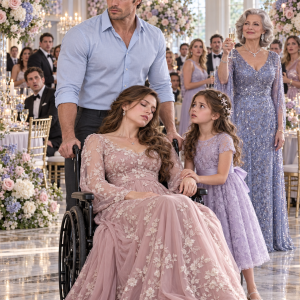
“You brought her here to embarrass me.”
“No,” Nathan answered. “Your transaction records accomplished that without assistance.”
The trustees assembled inside the pavilion. Cassandra’s attorney began presenting the emergency resolutions, claiming that legal uncertainty threatened the family’s assets.
Nathan requested that the independent compliance officer speak first.
Agent Reyes entered with two investigators.
She distributed certified copies of the recovered audit records and informed the trustees that federal warrants had frozen accounts connected to Vale Transit Holdings.
Cassandra’s composure fractured.
“These documents were stolen by a terminated accountant.”
I stepped forward.
“I created the audit while employed and reported the irregularities through authorized channels. Aaron removed my laptop afterward, but the evidence remained on the company server.”
The compliance officer displayed the approval chain.
Cassandra had authorized false contracts. Aaron established intermediary companies, while three executives disguised the transfers as transit-equipment purchases.
The final blocked transaction would have moved two hundred forty million dollars into accounts controlled through Cassandra’s private foundation.
One trustee asked why my child appeared in the strategy messages.
Nathan answered.
“Cassandra intended to marry Aaron, obtain emergency custody of Claire’s baby, and use the trust’s family-continuity provisions to expand her voting rights before the missing funds were discovered.”
Cassandra turned toward me.
“You were never supposed to understand any of this.”
The admission silenced the pavilion.
Agent Reyes stepped closer.
“Ms. Vale, you are under arrest for wire fraud, conspiracy, money laundering, obstruction, and attempted financial exploitation through fraudulent guardianship proceedings.”
Part 6 – The Husband Who Chose The Wrong Alliance
Aaron attempted to negotiate after Cassandra’s arrest.
He offered testimony against her in exchange for reduced charges and asked his attorney to arrange a private meeting with me.
Julia refused.
His written statement blamed Cassandra for the financial scheme, the online harassment, and the plan to use our child. He claimed he had married me for love but became trapped after Cassandra offered money and influence.
The recovered records contradicted him.
Aaron had searched my work files months before beginning the affair. He intentionally encouraged me to take the Vale audit home, then photographed documents while I slept.
After I became pregnant, he realized the child could support Cassandra’s trust strategy.
Their relationship began as an alliance before becoming an affair.
At sentencing hearings, prosecutors also introduced evidence from the roadway attack. Aaron had purchased the handgun illegally, tracked my medical appointment through a shared insurance portal, and followed me for more than an hour before I approached Nathan.
He pleaded guilty to conspiracy, attempted aggravated assault, stalking, unlawful firearm possession, identity theft, and obstruction.
Cassandra proceeded to trial and was convicted on multiple federal financial charges.
Several Vale executives also received prison sentences, while the family trust entered independent supervision.
My name was publicly cleared, although clearing a name did not restore the months spent wondering whether strangers believed every lie.
Nathan offered to purchase an apartment for me.
I declined.
“I need help with security and legal expenses, but I cannot rebuild my life inside another person’s generosity.”
He nodded without appearing offended.
Northline hired me as an independent forensic consultant after the company’s ethics committee reviewed the arrangement. I received market compensation, separate counsel, and complete authority to refuse any assignment involving the Vale family.
Nathan never referred to the position as a favor.
That distinction mattered.
Part 7 – A Child Born Without A Bargain

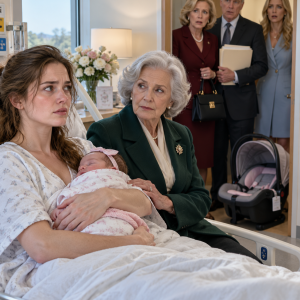
My son, Benjamin, was born in early June after fourteen hours of labor.
Nathan waited at the hospital with Julia and my closest friend from college, but he did not enter the delivery room until I invited him.
When he held Benjamin for the first time, his expression carried wonder rather than possession.
“He has your serious forehead,” Nathan said.
“He is six hours old. He does not have a professional expression yet.”
“I disagree. He appears deeply concerned about hospital management.”
I laughed, then cried because laughter had once felt impossible.
Aaron requested information about the birth through his attorney. The court permitted updates concerning Benjamin’s health but prohibited direct contact until a future assessment determined whether any relationship could occur safely.
I did not promise forgiveness on my child’s behalf.
Nathan became part of our lives gradually.
He attended pediatric appointments when invited, brought groceries without rearranging my kitchen, and learned that support sometimes meant leaving after asking whether I needed rest.
Several months after Benjamin’s birth, he told me that his feelings had changed.
We were sitting beside the Charles River while autumn leaves moved across the path.
“I do not want to become another man who decides what your life should look like,” he said. “However, I would like the opportunity to build something with you, at whatever pace leaves your choices intact.”
I looked toward Benjamin sleeping in the stroller.
“I am not ready for promises involving forever.”
“Then I am asking only for honesty involving next week.”
That answer made me smile.
We began with dinner.
Then another dinner.
Our relationship grew through ordinary decisions rather than rescue, wealth, or gratitude.
Nathan never asked me to call survival romance.
Part 8 – The Foundation Built From Evidence
Two years later, I became director of the Emerson Center for Financial Safety, a nonprofit created through restitution recovered from the Vale conspiracy.
The center provided forensic accounting, legal referrals, digital-security support, and emergency grants for people experiencing financial abuse during divorce, pregnancy, disability, or caregiving crises.
I designed the program around everything I had lacked when Aaron emptied the accounts and rewrote my reputation.
Clients did not need to appear perfect before receiving help. They did not need to explain why they stayed, why they doubted themselves, or why leaving required several attempts.
Nathan served on the fundraising committee but held no authority over client decisions.
Benjamin grew into a curious toddler who believed every computer belonged to him and every security badge was an invitation.
One winter afternoon, we passed the Fairmont Hotel where I had thrown myself into Nathan’s arms.
Snow covered the same pavement, although the construction barrier had disappeared.
“Do you ever think about that day?” Nathan asked.
“I think about how frightened I was.”
“I think about how quickly you trusted a stranger.”
“I did not trust you. I calculated that you looked less dangerous than Aaron.”
Nathan laughed.
“That is considerably less romantic than the version I remember.”
I looked at Benjamin walking between us, holding one finger from each hand.
The most important thing Nathan gave me was not protection, housing, employment, or access to powerful attorneys.
He gave me room to remain the author of my own recovery.
Aaron and Cassandra had viewed my pregnancy as leverage, my professional knowledge as property, and my fear as evidence that I could be controlled.
They were wrong about all three.
My son was not a key to anyone’s trust. My work did not belong to whoever stole the laptop. My fear did not make me weak; it told me when survival required reaching toward someone I had never met.
That first afternoon beneath the hotel awning, I believed I was running toward safety.
In reality, I was running toward the moment when I would finally stop allowing other people to explain who I was.
THE END