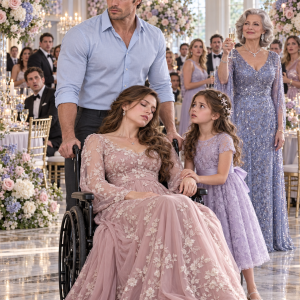
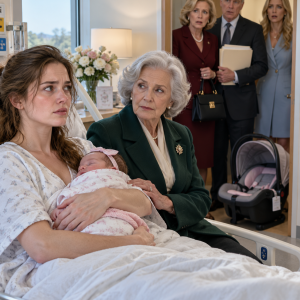
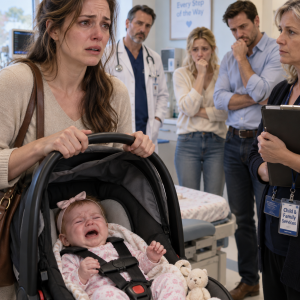
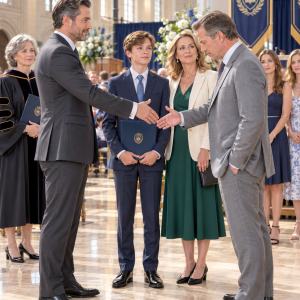
Instead, he had brought together the children of the two people whose lives he destroyed.
Part 4: The Records Hidden Beneath Charity
The federal investigation expanded rapidly.
For decades, Malcolm had used the Ashford Medical Foundation to transfer charitable funds into private laboratories, property companies, and investment accounts. Several hospitals paid inflated consulting fees to firms owned through relatives and former employees.
Lydia’s forty-eight-percent interest had been concealed through forged signatures and false death records suggesting she surrendered ownership before leaving the company.
She had not surrendered anything.
The original partnership agreement remained valid because Malcolm’s replacement documents contained notarization dates occurring after the notary’s death.
My research background helped investigators organize the archived corporate records. Every page involving my mother felt like another conversation we never had.
She had not been a minor employee.
She had designed the investment structure that allowed small regional clinics to share equipment and negotiate lower pharmaceutical costs. Malcolm later converted that model into a profit machine while removing her name from company history.
Camille testified about payments Malcolm used to control her mother’s medical care. Nathaniel provided emails showing that Malcolm manipulated his diagnosis, restricted access to independent specialists, and threatened to remove him from the family trust whenever he questioned corporate decisions.
The fertility laboratory became central to the case.
Investigators found biological materials taken from multiple women during unrelated procedures. Some samples were stored without consent, while others were used to support inheritance claims, paternity disputes, and private medical leverage.
The director claimed Malcolm wanted to preserve valuable family bloodlines.
The prosecutors called it organized medical abuse.
I learned that Malcolm had prepared guardianship documents that would have given Nathaniel control over my medical decisions if I appeared unstable during pregnancy. He planned to manipulate Nathaniel with false reports suggesting I might harm myself or the baby.
Nathaniel would have believed he was protecting us.
Malcolm would have controlled him through fear.
That knowledge did not excuse my husband’s secrecy, but it explained the machinery surrounding it.
Part 5: The Marriage I Refused To Repair Too Quickly

After I was released from the hospital, I moved into a furnished apartment near Cambridge with private security arranged through federal investigators. Nathaniel offered to leave our Beacon Hill home instead, but I needed distance from every room where silence had become ordinary.
“I will cooperate with whatever you decide,” he said.
“That is not the same as understanding what you did.”
“I know.”
“You humiliated me at the gala, treated the pregnancy like an inconvenience, and concealed information about my own history.”
“I believed secrecy was protection because that is what Malcolm taught me.”
“Protection without consent is another form of control.”
He accepted the sentence without arguing.
Nathaniel entered therapy, withdrew from the foundation, and resigned from every trust carrying Malcolm’s authority. He testified before a federal grand jury and signed away any claim he might have gained through our marriage over my mother’s ownership interest.
His attorneys called the decision unnecessary.
Nathaniel called it the first honest choice he had made.
Camille also entered counseling and remained part of the federal case. Our relationship developed slowly because her warning had saved me, but she had still used fear to force me toward the truth.
“I thought shock was the only thing that would make you question him,” she admitted.
“You were correct, but being correct does not make the method harmless.”
“I understand.”
For the first time, none of us demanded immediate forgiveness.
That restraint mattered.
Part 6: The Trial Of Malcolm Ashford
Malcolm’s trial began seven months later in federal court. He faced charges involving wire fraud, conspiracy, medical-record falsification, unlawful collection of biological material, obstruction, theft of charitable funds, and crimes connected to Adrian’s death.
The crash investigation had been closed decades earlier, but recovered payments to a mechanic and newly discovered correspondence established enough evidence for prosecutors to add charges related to the killing.
Malcolm entered the courtroom looking older but still composed. His attorneys argued that every decision protected a family enterprise supporting thousands of jobs and patients.
The prosecution answered with Lydia’s original partnership agreement, laboratory records, forged medical authorizations, and testimony from people Malcolm had controlled through money and treatment access.
When I testified, Malcolm watched me with the detached interest of someone evaluating property.
His attorney asked whether stress from pregnancy might have distorted my understanding of family business.
“Pregnancy did not forge my mother’s signature,” I answered. “Pregnancy did not collect biological material without consent, steal charitable money, or arrange a fatal crash.”
The courtroom remained silent.
Nathaniel testified the following day.
Malcolm stared at him throughout every answer.
“I raised you as my son,” Malcolm said when the judge allowed limited allocution.
Nathaniel looked directly at him.
“You raised me as evidence of your ownership.”
Camille testified about her mother’s treatment and the blank authorization she had been forced to sign.
The jury convicted Malcolm on nearly every major count.
During sentencing, he insisted that the Ashford empire would have collapsed without him.
I thought about my mother’s erased name.
The empire had not survived because of Malcolm.
It had survived what he did to the people who built it.
Part 7: The Estate Returned To Its Rightful History
A court-appointed administrator separated legitimate hospital investments from fraudulent holdings. The Ashford Foundation was dissolved and replaced with an independent public-benefit organization.
My mother’s forty-eight-percent ownership was restored through a combination of shares, recovered assets, and settlement payments. I placed most of the interest into a trust that could not be controlled by Nathaniel, Malcolm’s relatives, or any future spouse.
The trust funded maternal-health clinics, informed-consent advocacy, and legal assistance for patients whose medical information had been misused.
I named the program the Lydia Mercer Initiative.
Camille became an external adviser but held no financial control. Nathaniel refused an executive role and accepted a position teaching nonprofit governance at a business school outside Boston.
He did not ask me to return home.
He attended every prenatal appointment I allowed, arrived on time, answered questions honestly, and left whenever I asked for space.
The absence of pressure became more persuasive than promises.
Our daughter was born healthy in early autumn.
I named her Lydia Anne Mercer-Ashford.
Nathaniel held her with tears running silently down his face.
“She does not belong to any estate,” I told him.
“She belongs to herself,” he replied.
That was the correct answer.
Part 8: The Choice That Finally Became Mine

I did not reconcile with Nathaniel immediately. Trust rebuilt more slowly than love returned, and I refused to confuse tenderness with proof.
He continued therapy, maintained distance from family wealth, and testified during civil proceedings even when the disclosures damaged his reputation. He learned to tell me difficult truths before deciding whether I could handle them.
On our daughter’s first birthday, we gathered in the garden behind the Lydia Mercer Initiative’s first clinic. Camille attended with her mother, who had entered remission after receiving independent treatment. Dr. Morgan carried the birthday cake, while several former Ashford employees watched children play beneath autumn trees.
Nathaniel approached after the guests began leaving.
He carried the wedding ring I had removed in the hospital and left inside the cream envelope.
“I am not asking you to put this on,” he said. “I only wanted to return something that should remain yours until you decide what it means.”
I closed his fingers around it.
“Perhaps one day.”
His eyes filled with tears, but he did not ask when.
“I will wait for your choice.”
That sentence mattered because waiting without pressure was something the man I married had never understood.
Malcolm had arranged our meeting to capture my mother’s inheritance. He believed Nathaniel’s marriage would place me inside a legal structure he already controlled. He believed pregnancy would transform my body into another asset and fear would make both of us obedient.
Instead, the pregnancy activated the clause that restored Lydia’s ownership. The genetic investigation exposed Nathaniel’s true father. The stolen samples revealed decades of medical abuse. The child Malcolm described as estate property became living proof that his version of the family had been built on fraud.
Sometimes I still remember the gala, when I believed Nathaniel had chosen Camille while I stood alone with a dangerous pregnancy. The truth was more complicated than infidelity and more painful than betrayal.
Nathaniel had been raised by the man who killed his biological father. I had married into the family that erased my mother. Camille had been forced to trade silence for her mother’s treatment. Our daughter carried no responsibility for any of those crimes, yet her existence brought every hidden document into the light.
The hospital envelope never merely announced a pregnancy.
It opened a locked history.
Several months after the birthday, I agreed to attend couples counseling with Nathaniel. I did not return because he was wealthy, because we shared a child, or because his suffering resembled mine.
I returned because he finally learned that love does not decide for another person, conceal the truth for their supposed protection, or demand gratitude for choices they never authorized.
Our future remained uncertain.
For the first time, uncertainty felt honest.
My mother’s company no longer carried only the Ashford name. The new organization placed Lydia Mercer’s signature inside the entrance of every clinic funded by her restored estate.
Beneath the framed document, I added one sentence:
“Consent is not a courtesy granted by power. It is the boundary that makes care human.”
Nathaniel stood beside me when the first clinic opened, although he remained outside the photograph until I asked him to join.
That small pause represented everything that had changed.
Malcolm spent his life believing control proved ownership.
My daughter taught us the opposite.
Nothing truly belongs to us when it requires another person’s silence.
And no family deserves survival if preserving its name requires stealing someone else’s body, history, or freedom.
THE END