Part One: A Marriage Ending Outside the Operating Room
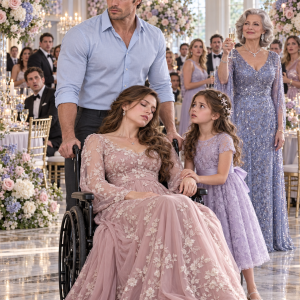
Thirty-eight minutes before surgeons stabilized my fractured spine, my wife called to explain that she would not spend her future caring for a disabled man. The sentence arrived with such casual precision that, for several seconds, it hurt more than the steel brace pressing against my neck.
“I have already met with a divorce attorney, Daniel,” Meredith said. “You should prepare yourself because I want my fair share of Alder House Group, the West Hills property, and every account accumulated during our marriage.”
Behind her voice, I heard a man coughing and the distinctive chime of an elevator inside our corporate headquarters. Only one executive had a persistent winter cough and worked late enough to be there on Sunday: my chief financial officer, Lucas Vann.
“I am being taken into emergency surgery, and you are discussing property with Lucas beside you?”
Silence answered before Meredith lowered her voice.
“Do not turn this into something theatrical. Lucas understands the company, while you may never walk through another hotel lobby without assistance.”
The call ended as an anesthesiologist entered. At forty-nine, I had spent twenty years restoring neglected Portland buildings into locally owned hotels. That morning, a temporary stairway collapsed at our newest property, leaving two vertebrae fractured near my spinal cord.
Surgeons could not promise how much movement would return, yet Meredith had already calculated what my immobility might purchase.
Rehabilitation nurse specialist Rachel Monroe stood beside me because complex spinal cases required recovery planning before surgery. She was forty-five and spoke with the authority of someone unimpressed by wealth or self-pity.
“Your heart rate increased after that call, so either someone delivered terrible news or your personality is naturally exhausting,” she said.
“My wife announced our divorce and began dividing a hotel company while I am still wearing construction dust.”
Rachel checked the monitor without offering empty sympathy.
“Then surviving surgery becomes your first negotiation, and everything else can wait outside the operating room.”
I laughed despite the pain.
“If I walk again, I may ask you to marry me.”
“If you walk again, I will first ask whether you can carry your own laundry and follow written instructions.”
Her refusal to treat me like a tragic millionaire steadied something inside me. As the anesthesia entered my bloodstream, I remembered the legal structure my aunt Evelyn and I created eleven years earlier, before I married Meredith.
Evelyn Caldwell had raised me after my parents died and financed my first restoration by selling farmland she inherited outside Salem. When Alder House Group expanded, she insisted that our historic buildings, trademarks, and controlling shares belong to the Caldwell Preservation Trust rather than me personally.
“People become reckless when affection convinces them that legal boundaries are insulting,” she had said. “A boundary written before love becomes complicated is kinder than a war written afterward.”
Surgery lasted nearly seven hours, and Rachel stood beside me when consciousness returned.
“Welcome back, Mr. Hale. Your legs responded during the final neurological examination, but you are forbidden to celebrate by attempting something idiotic.”
My right foot moved slightly beneath the blanket. Relief nearly overwhelmed me until my phone displayed an email from Meredith’s attorney. They intended to seek emergency conservatorship, arguing that medication and neurological trauma made me incapable of protecting marital assets or managing Alder House.
I showed Rachel the message.
“This is not merely a divorce,” I said. “Someone needs me legally silent before I become medically strong enough to object.”
Part Two: Recovery Under Surveillance
The following morning, I was transferred to a private rehabilitation suite. Rachel refused my request to attend a board meeting by video until I completed breathing exercises and sat upright without losing consciousness.
“You have metal supporting your spine, not a mechanical replacement for common sense,” she reminded me.
My attorney and oldest friend, Nathan Cole, arrived after lunch carrying corporate records and an expression that confirmed my suspicions.
Meredith had submitted a draft conservatorship petition supported by a confidential neurological assessment from Dr. Lucas Vann’s brother, a physician who had never examined me. The document claimed I displayed confusion, impulsivity, and narcotic-related delusions.
“They also obtained portions of your medication record before your hospital released anything through discovery,” Nathan explained. “Someone inside the rehabilitation network provided protected information.”
Lucas had already called an emergency board meeting to propose himself as interim chief executive. He told directors that my accident threatened lender confidence and that Meredith, as my spouse, supported temporary executive continuity.
“Do not stop the meeting,” I said. “Let them explain the entire plan while believing I cannot participate.”
Nathan arranged an independent capacity examination and preserved every access log associated with my records. Rachel documented my orientation, memory, reasoning, and treatment decisions during every shift, not as a favor but because accurate clinical notes offered the strongest answer to manufactured incapacity.
Physical therapy began with movements so small they would once have seemed insulting. Rachel helped me sit, transfer weight, and tolerate a standing frame while reminding me that recovery measured repetition rather than pride.
On the third day, she received a call concerning her father, a retired postal worker waiting months for an accessible apartment after losing part of his leg. Rachel ended the call with frustration she attempted to hide.
I contacted the nonprofit housing director who leased space inside one of our hotels. Two available units had been reserved for emergency accessibility placements, and Rachel’s father qualified without special treatment.
When Rachel learned what I had done, her gratitude arrived with suspicion.
“If this is intended to purchase affection, you should cancel the application immediately.”
“Your father met the criteria before I knew his name, and helping him does not create an obligation to me.”
Her expression softened, although she pointed toward the therapy rails.
“Good answer, but you still owe me another ten steps.”
Those steps became fifteen by the end of the session.
Meanwhile, the digital audit identified Lucas’s executive assistant accessing my clinical portal through credentials belonging to a contract nurse. Security footage showed the nurse meeting Meredith inside a parking garage and receiving an envelope.
The nurse agreed to cooperate after investigators presented the footage. She admitted that Lucas requested medication lists and neurological notes so his brother could construct a false incapacity assessment.
Nathan wanted to confront them immediately, but I asked him to wait. Meredith and Lucas still believed the stolen records were hidden and their conservatorship evidence appeared credible. If we exposed one violation, they might abandon the broader takeover before documenting their intent.