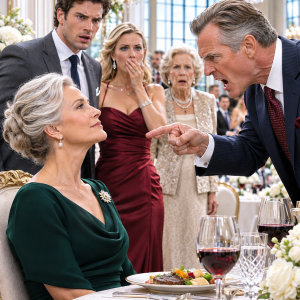
She admitted fabricating the pregnancy report and participating in the proposed sale of jewelry, although she claimed Grant designed the identity-theft plan.
Their relationship ended during the hotel confrontation and never recovered. Each considered the other dishonest while refusing to recognize how willingly both had participated in deception.
Civil proceedings returned my artwork, financial records, and jewelry. Several relatives repaid unauthorized purchases after selling vehicles or luxury belongings.
Patricia moved into a modest rental apartment after losing card access and the financial support she believed originated from Grant. She sent multiple apology letters that focused primarily on her reduced circumstances.
Grant contacted me through attorneys seventeen times. His final letter claimed that twenty years of marriage justified another opportunity and blamed Madison, Patricia, workplace pressure, and personal insecurity.
I never responded because love does not forge signatures, pack another person’s property, or organize a party celebrating her displacement.
The divorce decree had already ended our marriage, while the hotel evening simply revealed everything the legal process could not display emotionally.
I remained inside the penthouse only until corporate security completed its review. Afterward, I moved into a quieter residence overlooking Lake Michigan, choosing rooms associated with no performance or apology.
For the first several weeks, I still caught myself preparing explanations before making ordinary decisions. Marriage had trained me to justify travel, purchases, meetings, and even time spent reading alone.
Freedom arrived gradually through small experiences: selecting dinner without criticism, speaking during board meetings without softening conclusions, and seeing my own name on invitations without hiding behind initials.
Part Six: Building Something from the Silence
Six months after the confrontation, Andrew presented a proposal during a Whitaker Holdings board meeting. The project would provide confidential financial education, legal referrals, and transition assistance for women experiencing economic manipulation within marriages.
“Are you prepared for people to connect the program with your own experience?” he asked.
I looked across Chicago from the conference room and considered how long silence had protected Grant’s reputation at the expense of my reality.
“Let them understand that beginning again at forty-eight is not failure, because remaining small for someone else’s comfort is the greater loss.”
The board approved five million dollars in initial funding, independent governance, and partnerships with established community organizations. I declined to place my name on the program because survivors needed resources rather than a monument to my divorce.
The initiative provided credit reviews, identity-protection support, emergency planning, and education about authorized-user accounts. Many participants resembled the woman I had once been: professionally capable but trained to doubt their right to control personal resources.
One participant asked why successful women remained inside financially manipulative relationships. I answered without pretending education or wealth automatically protected anyone.
“Manipulation succeeds by converting love into obligation and patience into evidence that boundaries are unnecessary.”
My story became useful only after it stopped being a secret. I never discussed private medical details publicly, although I refused to accept shame surrounding infertility.
Grant and Patricia had treated motherhood as the measure of my worth because that standard allowed them to ignore everything else I created. Reclaiming my identity required understanding that no biological outcome could invalidate a woman’s life.
Andrew remained my legal director rather than becoming a personal rescuer. His work protected the corporation, while my decisions defined the future I wanted.
That distinction mattered because the next chapter could not depend upon another person assuming control on my behalf.
Part Seven: The Account Finally Belonged to Me

Two years after the divorce, the Sterling Crown hosted an annual gathering for the financial-independence initiative. The same ballroom once decorated for Grant’s celebration now contained counselors, attorneys, educators, and women rebuilding their lives.
I stood near the entrance before delivering brief remarks. No engagement display occupied the stage, while no luxury champagne existed merely to prove status.
The evening focused upon practical support, shared experience, and the freedom to make informed choices.
“Financial control rarely begins with an empty bank account,” I told the audience. “It often begins when someone convinces you that asking questions demonstrates disloyalty.”
Afterward, a woman near my age approached and said she had recently removed her husband from accounts he repeatedly misused. She worried that protecting herself made her cruel.
“A boundary does not become cruelty because someone benefited from its absence,” I told her.
Her relieved expression reminded me why converting personal pain into structured assistance mattered more than watching Grant face consequences.
He eventually accepted responsibility for several financial violations through negotiated proceedings. Restitution consumed much of his future income, while his professional reputation never recovered completely.
Madison relocated after resolving her involvement, and Patricia maintained no contact after realizing apologies would not restore financial access. Their lives continued outside mine, which became the most complete form of closure.
I never regretted canceling the cards at eight o’clock. The timing appeared theatrical, but the authorization ended only after our divorce became final and every necessary record had been preserved.
Grant’s celebration did not collapse because I created a trap. It collapsed because the wealth, property, and influence supporting it never belonged to him.
The black card had represented everything he misunderstood about our marriage. He viewed access as ownership, accommodation as superiority, and my silence as proof that his version of reality remained uncontested.
Years earlier, I believed concealing authority represented love because it protected his confidence. Healthy love would have required him to celebrate my strength rather than demand that I hide it.
The greatest luxury I recovered was not the hotel, jewelry, penthouse, or investment portfolio. It was the ability to speak without calculating how my truth might injure another person’s ego.
One evening after the annual gathering, I returned alone to the ballroom. Staff had cleared the tables, and city lights entered through tall windows.
David approached with the final event report and asked whether I needed anything else.
“Nothing further tonight, because everything important has already been settled.”
I walked through the quiet lobby where Grant once accused me of stealing his accounts. The memory carried no power now because I understood what had truly happened.
I had not taken anything from him. I had stopped allowing him to use what belonged to me.
Outside, Chicago moved beneath clean winter light. People entered hotels, left restaurants, and crossed crowded streets carrying private histories nobody else could see.
At forty-eight, I once believed divorce meant reaching the end of the life I had planned. Instead, it became the first year in which my achievements, choices, and voice occupied their full size.
Grant organized a seventy-thousand-dollar party to celebrate removing an unemployed wife from his future. By midnight, his guests knew that the so-called dependent woman owned the hotel, controlled the accounts, and had spent decades protecting him from the limitations he refused to acknowledge.
That revelation was never my greatest victory. My greatest victory came later, when I no longer needed an audience to confirm my worth.
I learned to enjoy a quiet dinner without comparing it to public humiliation, lead a board meeting without disguising authority, and enter my own properties without wondering whether confidence appeared unfeminine.
Real wealth cannot be measured only through assets because people can possess money while surrendering their dignity to preserve relationships. Real freedom begins when resources, decisions, and identity return to the person who earned the right to control them.
The authorized cards disappeared from my banking dashboard long ago, leaving only the primary account carrying my name. Whenever I viewed it, I remembered that financial clarity and emotional clarity often arrive together.
For twenty years, I financed Grant’s illusion because I believed preserving marriage required continuous sacrifice. Eventually, I understood that sacrifice without respect merely teaches another person how much exploitation will be tolerated.
The party at the Sterling Crown ended before dessert, but my life did not end inside that lobby. It began again when the cards failed, the lies became visible, and I finally refused to fund my own humiliation.
THE END