1. The Night He Needed Me to Break
“Our marriage is over, Natalie, and I think everyone here deserves to understand why.”
My husband did not say those words behind a closed bedroom door or across a lawyer’s conference table.
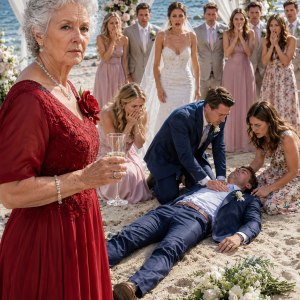
He said them into a microphone inside the Magnolia Ballroom of the Whitmore Crown Hotel in Savannah, Georgia, while nearly one hundred eighty employees, investors, executives, relatives, and longtime family friends watched me from tables dressed in white linen.
For several seconds, nobody moved.
My name is Natalie Whitmore Hale, and the ballroom belonged to the hotel company my father had spent most of his life building.
The chandelier above me came from a restored theater in New Orleans. The carved walnut paneling had been chosen by my mother. The brass reception clock outside the ballroom had hung in the lobby of my grandfather’s first coastal inn.
Almost everything around us carried my family’s history.
My husband, Preston Hale, seemed determined to rewrite that history before dessert.
Beside him stood Camille Warren, thirty-two years old, elegant in a navy evening gown, with one hand resting lightly against Preston’s arm.
Three weeks earlier, I had found the receipt for the diamond earrings she was wearing inside Preston’s desk.
At the time, I thought an affair might be the worst thing waiting for me.
I was wrong.
Preston placed a cream envelope on the head table.
“The divorce petition is inside,” he continued. “I have delayed this conversation because Natalie has been under extraordinary strain, and I wanted to protect her privacy.”
There it was.
Not anger.
Concern.
A carefully rehearsed husband protecting a fragile wife.
My mother, Diane Whitmore, rose halfway from her chair.
“Preston, this is neither the time nor the place.”
His mother, Lorraine Hale, touched my mother’s wrist.
“Perhaps it is finally time people stopped pretending everything is normal.”
I turned toward her.
Lorraine’s expression contained no surprise.
That mattered.
My younger brother, Daniel, stood abruptly.
“You planned this?”
Preston looked at him.
“I planned to stop lying to everyone.”
“Then why bring her?” Daniel demanded, pointing toward Camille.
Camille stiffened.
Preston took her hand.
“Because Camille is part of my future.”
A murmur spread across the ballroom.
I watched people avoid my eyes.
Several members of the Whitmore Hospitality board looked uncomfortable but remained seated. Senior managers who had known me since childhood studied their plates as though the place settings required urgent attention.
Preston lowered his voice into the gentle tone he had been using with me for months.
“Natalie, please sit down before this becomes more stressful for you.”
A perfect line.
He needed me angry.
He needed tears, shouting, confusion, perhaps a glass thrown across the ballroom if fortune favored him.
He needed witnesses who would remember an emotionally unstable woman losing control in front of nearly two hundred people.
Instead, I walked away from him.
Several guests assumed I was leaving.
I crossed the ballroom toward a narrow display table near the entrance, where a matte-black box sat beside a vase of magnolia branches.
I had carried that box into the hotel myself.
Nobody had asked about it.
I returned to the head table and placed it directly on top of the divorce papers.
The sound was small.
The silence afterward was not.
Camille gave a nervous laugh.
“What is that?”
Preston smiled.
“A farewell gift?”
I met his eyes.
“Open it.”
He lifted the lid.
Inside lay an old brass key.
Nothing else.
His expression changed instantly.
The confidence disappeared so completely that Daniel noticed.
So did Lorraine.
Preston stared at the key.
“Where did you get this?”
For the first time that evening, he sounded afraid.
I leaned slightly closer.
“The important question is what I found after I used it.”
2. The Key My Father Left Behind
Eleven days earlier, I had been cleaning my father’s private study at our family home outside Beaufort, South Carolina.
Charles Whitmore had died four years before.
He began with a failing twelve-room seaside inn and spent three decades building Whitmore Crown Hospitality into a twelve-property luxury hotel group stretching from Georgia to North Carolina.
I grew up inside that business.
At thirteen, I folded laundry during holiday weekends.
At sixteen, I worked reception during summer breaks.
At twenty-eight, I became my father’s principal operating partner.
After his death, I inherited controlling ownership through the Whitmore Family Trust.
Preston remained co-executive under a marital governance agreement my father had approved years earlier, when he still believed Preston understood the difference between partnership and possession.
While sorting old ledgers, I lifted a leather accounting book and heard something strike the floor.
A brass key.
Number 312.
Inside the ledger, taped beneath the cover, was a note in my father’s handwriting.
If you ever find this, go alone and tell no one until you understand why I hid it.
The following morning, I drove to a private records facility outside Hilton Head.
Box 312 contained trust amendments, old corporate resolutions, sealed correspondence, and a thick folder labeled:
CONTINGENT CONTROL REVERSAL — CONFIDENTIAL.
I read the first ten pages standing beside the storage table.
Then I sat down.
My father had created a hidden protective structure twelve years earlier.
If I were ever declared legally incapacitated, Preston would not gain expanded authority over the company.
He would lose every delegated management right derived through our marriage.
Control would transfer temporarily to an independent fiduciary panel until my capacity was restored.
At first, I thought my father had simply been excessively cautious.
Then I found another document.
A preliminary petition seeking emergency guardianship over my property and business interests.
Filed three weeks earlier.
Petitioner: Preston Hale.
The petition alleged progressive cognitive impairment, memory disturbances, emotional instability, impulsive financial behavior, and episodes of workplace aggression.
I had never been diagnosed with any of those things.
Yet attached to the petition was a medical summary bearing my name.
3. The Wife They Were Manufacturing

I drove directly to the Charleston office of my longtime friend and attorney, Grace Bennett, a commercial litigator who had handled complex shareholder disputes for years.
She read the guardianship petition twice.
Then she read my father’s protective amendment.
“Does Preston know this clause exists?”
“I do not think so.”
“Then we keep it that way until we know exactly what he has done.”
Grace examined the medical summary.
The document claimed I had demonstrated increasing confusion during executive meetings, forgotten contractual commitments, and experienced an episode of uncontrolled anger toward a hotel manager.
One problem was immediately obvious.
The alleged confrontation occurred on a Wednesday afternoon in Savannah.
I had been in Nashville that entire day negotiating a management agreement.
Flight records, hotel security footage, calendar entries, and six witnesses could prove it.
The physician named on the report was Dr. Meredith Lang, the private doctor Preston had encouraged me to begin seeing six months earlier.
He claimed he was worried about exhaustion.
I had been sleeping poorly after my father’s death anniversary and managing a difficult property renovation. Dr. Lang prescribed a mild medication for sleep.
Several weeks later, Preston began asking strange questions.
Had I forgotten meetings?
Was I repeating myself?
Did I remember signing certain documents?
Whenever I disagreed with him, he would say, “Natalie, you have been under so much pressure lately.”
Concern had become a weapon.
Grace obtained the public court docket.
The hearing on Preston’s emergency guardianship petition was scheduled for the morning after the Whitmore Crown annual leadership gala.
Suddenly the gala made sense.
“He needs witnesses,” I said.
Grace nodded.
“He needs a story.”
“He announces the affair, humiliates me publicly, and waits for me to react.”
“Then his attorney tells the judge the next morning that nearly two hundred people watched you become emotionally unstable.”
I looked at the petition again.
“He is not leaving me.”
Grace understood.