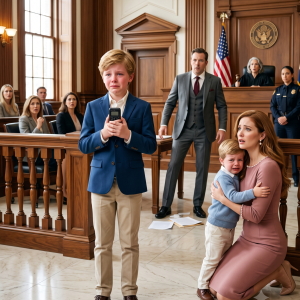
During one supervised visit, Oliver initially remained beside Lauren before carrying his blue rabbit toward Emily. She knelt, opened her arms, and waited without pulling him forward. When he finally leaned against her, Emily buried her face in his hair and cried silently.
“He remembered the song I used to sing during breakfast,” Emily said afterward.
“Children remember safety in fragments, which means you can create new fragments consistently.”
Rebecca continued volunteering at the family resource center and helped both women understand services without becoming the unofficial decision-maker. She eventually apologized for placing Oliver into Lauren’s arms at the cemetery.
“I was terrified the system would move faster than compassion, but fear did not justify ambushing you during your mother’s burial.”
Lauren accepted the apology without rewriting the harm. “Your method was terrible, although it forced everyone to confront a deadline Patricia should have discussed openly.”
Diane became Oliver’s enthusiastic great-aunt without assuming daily responsibility she could not sustain. She baked lemon bars, complained about plastic toys beneath her feet, and reminded Lauren that temporary care did not require emotional distance.
The hardest adjustment came when Oliver began calling Lauren “Lolo,” a name emerging somewhere between Lauren and an uncertain toddler sound. She treasured it because it belonged only to their relationship and threatened nobody else’s place.
Part 7: The Hearing That Changed the Plan

At the ninety-day review, Emily had stable housing, ongoing counseling, verified sobriety, and consistent supervised visits. However, her caseworker recommended gradual transition rather than immediate reunification because Oliver still reacted anxiously to unfamiliar sleeping arrangements.
Lauren supported extended visits, then weekend stays, while maintaining the bungalow as Oliver’s predictable base. Her decision surprised several relatives who assumed attachment would make her fight to retain control.
“I did not reorganize my life to win somebody else’s child,” Lauren explained. “I remained because he needed continuity while his mother rebuilt enough stability to provide it.”
Emily completed her first overnight visit one month later. She called Lauren twice after Oliver fell asleep, once about his preferred blanket and again because she feared every sound indicated illness.
“You are allowed to feel frightened without treating fear as evidence of failure,” Lauren told her.
Six months after Patricia’s funeral, the court approved a trial reunification placement. Lauren packed Oliver’s clothes, medical information, favorite cups, blue rabbit, and Patricia’s notebook into two bags. Emily arrived wearing a clean winter coat, carrying a properly installed car seat and a written weekly schedule.
At the doorway, Oliver wrapped both arms around Lauren’s neck. The embrace almost dismantled every principled statement she had made about temporary care.
“Lolo will still visit after you go home with Mommy,” Lauren promised, although her voice trembled.
Emily waited respectfully before taking him. “You gave me time without teaching him to forget me, and I will never pretend that was easy.”
“Patricia wanted him protected, but she also wanted the adults around him to choose courage over possession.”
Oliver left holding Emily’s hand and dragging the blue rabbit along the walkway. Lauren remained at the doorway until their car disappeared, then entered the suddenly quiet house and allowed herself to grieve another departure without calling it regret.
Part 8: The Meaning of Staying
Lauren eventually returned to her regional director position, although she negotiated a hybrid arrangement that divided her time between Dallas and Iowa. She sold Patricia’s bungalow only after Emily established a permanent apartment nearby, then purchased a smaller Cedar Falls townhouse with a guest room Oliver immediately claimed through scattered toys.
Emily retained custody, continued recovery services, and contacted Lauren during difficult moments before those difficulties became emergencies. Their relationship never became effortless friendship, because gratitude, guilt, grief, and legal history created boundaries that affection alone could not remove. Nevertheless, they developed something honest enough to support Oliver.
Rebecca remained his godmother, Diane remained the aunt who supplied excessive desserts, and Lauren became Lolo, the reliable adult who attended birthdays, preschool performances, and pediatric appointments whenever Emily requested support. Family developed around Oliver through responsibility rather than ownership.
On the first anniversary of Patricia’s death, everyone gathered at the cemetery with winter flowers. Oliver placed his blue rabbit temporarily against the headstone before climbing into Lauren’s arms.
“Grandma Pat helped Mommy and helped me,” he said after Emily prompted him gently.
Lauren looked toward Emily, whose eyes filled without collapsing beneath shame. “She believed people deserved another chance when somebody could keep the door open safely.”
Afterward, Lauren returned alone to the empty bungalow before its closing date. She found Patricia’s green raincoat inside the hallway closet and the original letter tucked inside her handbag. Her mother had handled everything imperfectly, withholding the truth and placing responsibility where consent should have existed. Yet Patricia had also protected a vulnerable child without reducing his struggling mother to her worst season.
Lauren no longer believed home was merely where people grew up before leaving. Home could be a temporary promise honored carefully, a courtroom plan designed for reunion, or a familiar voice answering during somebody else’s midnight panic.
Her career had taught her to solve problems by controlling schedules, personnel, and outcomes. Oliver taught her that meaningful responsibility sometimes required holding uncertainty without converting it into possession. Emily taught her that motherhood could survive accountability, provided shame did not become a locked door.
Before leaving the bungalow, Lauren switched off the porch light and carried Patricia’s raincoat toward her car. Oliver would visit the following weekend, Emily had begun training for steady employment, and Lauren’s company had promoted another director to share the territory she once controlled alone.
None of those changes resembled the life Lauren had planned before the funeral. They resembled something stronger because every person involved had finally chosen rather than simply inherited a role.
At Patricia’s grave, a frightened woman had placed a toddler into Lauren’s arms and claimed her mother wanted an adoption. The truth became less dramatic and more demanding: Patricia wanted Lauren to create enough safety for a family to repair itself.
Lauren had feared that staying would require sacrificing everything she had built. Instead, staying taught her which parts of her life were structures and which were merely walls. She had not become Oliver’s replacement mother, and Emily had not been erased by her crisis. Together, they became evidence that protection and reunion could belong inside the same story.
THE END