Emma Walters had spent years walking on eggshells. Her husband, Daniel, was a respected accountant in Seattle—polished in public, cruel in private. The bruises had long become part of her body’s geography. When neighbors asked, she laughed them off as “clumsy mistakes.” Inside their house, silence was survival.
That morning in late October, Daniel was angrier than usual. Emma had misplaced a document he needed for a client meeting. His voice rose like a blade, cutting through the kitchen’s stillness. She tried to explain, but before she could, his hand came down. The next moment, she remembered only the blur of the floor rushing up, the crack of her skull, and Daniel shouting her name—not in remorse, but in fear.

He carried her limp body to the car, rehearsing the story under his breath. She slipped. She slipped on the stairs. At the emergency room, his charm returned—worried husband, trembling hands, perfect story. The nurse nodded and took Emma inside.
When Dr. Martin stepped in, Daniel’s mask started to tremble. The doctor was in his early fifties, calm but with sharp eyes that had seen too much. He opened Emma’s file, scanning the records. The room turned still. “Mr. Walters,” he said quietly, “your wife has been here before, hasn’t she?”
Daniel blinked. “No, first time. She just fell—”
Dr. Martin’s tone hardened. “That’s strange. Because her previous X-rays—filed under her maiden name—show multiple fractures over the past three years. Same pattern. Same explanations. ‘Accidents.’”
Daniel’s face went white. His lips parted, but no words came.
When Emma’s eyes fluttered open, she saw the doctor’s expression—part sorrow, part fury—and Daniel frozen beside him, speechless. The truth hung in the air like a verdict. For the first time in years, Emma realized the secret wasn’t hers to hide anymore.
Outside the door, a nurse was already on the phone, her voice steady. “Yes, this is Harborview Hospital. We need a domestic violence officer immediately.”
And in that sterile white room, as the sound of sirens grew nearer, Daniel Walters finally understood that the story he’d written for years—of control, silence, and fear—was no longer his to tell.
The police arrived within twenty minutes. Officer Linda Chavez, a veteran in domestic cases, entered with practiced empathy. She spoke softly to Emma while paramedics finished cleaning the blood from her temple. Daniel tried to interject, but Linda’s partner blocked him with a simple hand gesture.
Emma trembled as she spoke. At first, her sentences were fragmented—half memories, half apologies. “He… gets angry sometimes. I make mistakes…” Linda met her gaze. “Emma, none of this is your fault.”
The words cracked something open. Years of excuses spilled out—nights spent locked in the bathroom, bruises hidden under long sleeves, her lost job after he “accidentally” called her boss drunk. Linda documented everything, taking photos of the bruises that patterned her arms like faded maps.
In another room, Daniel’s composure began to crumble. “You don’t understand,” he said to the detective. “She’s fragile. Always falling. I love her.” But when the officer presented the hospital reports—seven previous visits, all with identical injuries—his confidence faltered.
Meanwhile, Dr. Martin signed a statement, confirming his suspicion of prolonged abuse. “She’s lucky to be alive,” he told the police. “That skull fracture could’ve killed her.”
By nightfall, Daniel was in custody, charged with aggravated assault and domestic battery. Emma stayed in the hospital, the sterile walls both prison and protection. For the first time, no footsteps came down the hallway at midnight.
The next morning, a social worker named Karen sat by her bed. “You’ve got a long road, Emma,” she said gently. “But you’re not alone. There’s a shelter downtown, and we can help with legal aid.”
Related Posts

Three Days After the Hospital Said Our Newborn Son Hadn’t Survived, I Was Seconds From Naming My Brother Heir—Then an Eight-Year-Old Girl Walked In Carrying a Crying Baby Wearing Our Family Name…

“That Five-Year-Old Boy Has Your Eyes,” My Girlfriend Whispered When My Former Wife Appeared on Our Yacht—Then He Called Her “Mom,” Showed Me the Compass I Had Given Her Before Our Divorce, and Said Six Words That Made Me Question Everyone I Trusted
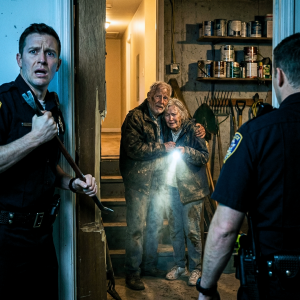
My own son locked us in the basement. But he didn’t know my husband had been preparing for this betrayal for 39 years… and what we found behind that wall destroyed their entire plan

Billionaire CEO Sees His Ex-Girlfriend Waiting for an Uber With Three Kids—All Three Identical to Him