After her mother’s funeral, Claire Whitman walked out of the church with little more than a worn canvas tucked beneath her arm. Her sister, Rebecca, left with the keys to three summer houses along the coast. Relatives whispered about fairness, about what counted as real inheritance. Rebecca smiled through her tears, already calculating what she could sell. Claire only carried the painting, her mother’s favorite, though the frame was cracked and the varnish yellowed.
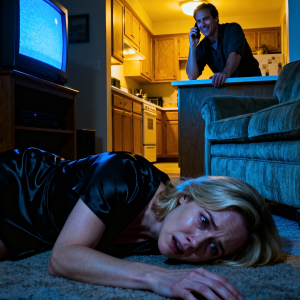
That evening her husband, Cole, stared at the painting with contempt. He ripped it off the wall and let it crash against her feet. “That old thing? Your sister got estates, and you got trash. You two are made for each other.” He stormed out, leaving Claire crouched over the broken frame, palms trembling. She didn’t say a word, but she kept the painting safe, as if guarding something more fragile than canvas.
Weeks passed. Claire worked in a small art restoration studio in New York. She studied the painting late at night, gently lifting layers of grime. One evening, while adjusting a lamp, she noticed the brushwork beneath the surface—strong, unfamiliar, almost defiant. She cleaned more, and her breath caught. This wasn’t her mother’s simple landscape. It was the underpainting of a lost work by Samuel Garrison, a nineteenth-century American painter whose “First Dawn” had vanished decades earlier.
Claire brought the discovery to Mr. Whitaker, the director of the Metropolitan Art Museum. He examined it under UV light and leaned back, silent. Finally he said, “Mrs. Whitman, do you understand what you’ve brought me? This is history. This is priceless.”

The museum organized a special exhibition. On the opening night, journalists filled the hall. The covered canvas waited on the stage. When it was unveiled, the audience gasped as though breathing with one voice. Applause thundered, cameras flashed, and Mr. Whitaker wiped tears from his eyes. Claire stepped aside, letting the painting shine on its own.
When the applause eased, she took the microphone. Her voice was steady. “My mother gave me this painting. It seemed small compared to what my sister received, but it carried something greater: her trust. Tonight, I return this work not as an owner, but as a daughter finishing what she began.” She turned toward Whitaker. “On behalf of my family, I return ‘First Dawn’ to the Garrison legacy.”
Applause shook the room again. But Claire wasn’t finished. She glanced toward the far corner, where Rebecca stood with Cole. Their faces were pale, their eyes darting like trapped animals.
Claire’s tone cooled. “But you should know the cost of this moment.” She gestured backstage. The giant screen lit up with Rebecca’s posts: accusations that Claire was unstable, that she’d stolen an heirloom, pleas for sympathy from “a betrayed sister.” Murmurs rippled through the hall.
The next slide showed Cole’s reposts, calling Claire delusional, hinting she was unfit to inherit. Then came private messages: “We need to push that she’s losing it. Collect every odd thing she’s ever done. Once people see her as unstable, we can contest the will.”
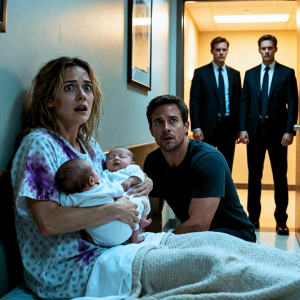
The audience erupted. Gasps, whispers, indignation swelling to open outrage. Claire didn’t insult them; she simply showed their words. The room itself passed judgment. Rebecca and Cole shrank against the wall, blinded by camera flashes, hemmed in by security.