My father’s jaw tightened. My mother’s voice softened in the way it did when she wanted to make a demand sound loving.
“Sweetheart, you’re making a terrible mistake. Whatever this woman says, we’re still your parents.”
“I know. Then explain why you hid Grandma’s letters.”
Her face lost color. Neither answered.
Martha showed delivery confirmations signed at my parents’ home, then a certification claiming I had agreed to let them handle the trust correspondence.
I stared at my mother’s name beneath the claim.
“You told them I knew?”
My mother swallowed. “We were trying to prevent you from making impulsive decisions.”
“You signed a form saying you had told me.”
My father cut in. “She didn’t understand the wording.”
Martha answered evenly. “The statement is straightforward.”
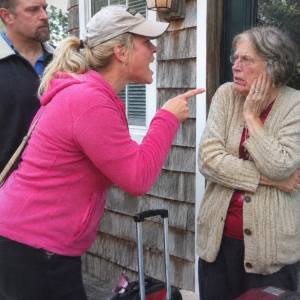
My mother looked toward the road, searching for a way out of the conversation. At last she said, “We expected to tell you when the timing was right.”
I gave a short, disbelieving laugh. “When would that have been? After you got access to the money?”
My father’s face darkened. “Watch yourself.”
I looked down at my shoes, then at the gate between us. My feet were warm. His anger could no longer decide whether I had a place to sleep.
“No,” I said.
He blinked. “No?”
“I’m not watching myself so you can avoid answering.”
My mother insisted June had been confused and that they wanted to manage the funds sensibly. Martha reminded them the trust barred them from controlling my inheritance; my verification was complete, and the disputed papers would be reviewed.
My father turned to me. His expression changed from anger to calculation.
“Sweetheart, we’ve all made mistakes. We were upset Thursday night.”
My mother nodded. “Everyone said things they didn’t mean.”
“You made me walk through freezing rain without shoes.”
My father looked uncomfortable. “That wasn’t ideal.”
“I need you to say what you did without blaming me.”
He looked away. “We were trying to teach you responsibility.”
Even now, he could not acknowledge that he had been wrong. I nodded slowly.
“Then there’s nothing else to discuss.”
My mother began to cry. For a moment, the old urge to comfort her rose so strongly I could hardly breathe. Then I remembered myself at the gas station, shivering and unsure whom I could call for a warm place to sit.
“Please leave,” I said.
My father stared at me. “We’re your parents.”
“I know. I need some distance.”
I turned toward Martha and walked back up the driveway. My mother called my name, then called again, but I did not turn around. My phone vibrated with a message: “You’re choosing money over your family.” I stopped and typed, “No. I’m choosing the right to live without being controlled.” Then I sent it without waiting for an answer.
A Door I Did Not Have to Beg to Enter

That evening, rain tapped against the windows as Hannah made tea and Martha reviewed the records. I thought I would feel happy, but mostly I felt tired. Martha said June had likely foreseen the risk and created safeguards while leaving me room to choose.
I arranged to collect my belongings with Hannah beside me. My mother asked why I had brought someone; my father accused me of hiding behind people. I repeated that I was there for my things. I picked up my sneakers, packed my clothes, and found June’s graduation card: “Build something that belongs to you.”
My father watched me carry the last bag. He warned that I would make mistakes.
“Probably. But they’ll be my mistakes.”
My mother said June had torn the family apart. “Grandma gave me a choice. You couldn’t accept that I might use it.”
“So that’s it?”
“I hope someday we can have a relationship based on respect. Until then, I need distance.”
I carried my bags outside wearing shoes. This time, no one could tell me to leave them behind.
I separated my accounts from old authorizations, changed recovery information, and provided records when the banks asked about disputed changes. Every completed step returned a piece of my life to me.
I accepted another contract and set up an office in a room at June’s house overlooking the garden. At first, the quiet felt strange. Then it felt peaceful.
The trust process continued, my rights were acknowledged, and the property arrangements moved forward. When Martha confirmed the transfer was complete, I cried because I could make plans without first calculating how to keep my parents from becoming angry.
A month later, my father emailed about his embarrassment and my mother’s strain, hoping I would recognize their sacrifices. He did not mention his actions. I did not reply.
My mother sent old photographs and wrote, “We were a happy family once.” The good moments had been real, as had the fear. I could miss them and keep my distance.
Several weeks later, Martha visited to review the final records. I asked why June had chosen twenty-eight.
“She gave me too much credit,” I said.
“Perhaps she gave you more credit than you were used to receiving.”
That evening, I stopped at a photograph of June and me at graduation.
“I wish I’d understood sooner,” I whispered.
She had never demanded my passwords or withdrawn affection when I disagreed. She had reminded me I could choose who to become, then left a home my parents could not use as leverage.
My parents had wanted every dollar to come with conditions. June had wanted the conditions removed.
A few days later, my father sent a shorter message: “Your mother misses you. We don’t understand why you won’t come home.” I stood in the kitchen, reading it in the warm afternoon light. I looked at the coffee cup on the table, my laptop beside a stack of notes, and my shoes near the back door. At last, I knew how to answer.
“I am home. I didn’t stop loving you because I inherited something. I stopped allowing you to control me because I finally understood that love should not require surrendering my independence. If we ever rebuild our relationship, it will have to begin with honesty, accountability, and respect. Until then, I need distance.”
I read it once and sent it. My hands shook afterward. I expected panic and guilt, but what came was sadness and relief. Becoming free did not mean I had stopped caring. It meant I was learning to care about myself, too.
That night, rain returned. I remembered the cold pavement and forty-three dollars, but also the kind cashier, Hannah’s help, and the gate. It had taken years of doubt to see what my parents’ affection looked like without my obedience.
I opened the front door. Cold air drifted into the warm hall, rain shimmered beneath the porch lights, and no one stood behind me demanding an apology. I could step outside or stay inside. The choice was mine.
“Thank you, Grandma,” I whispered, and closed the door against the rain—not because I feared what waited outside, but because, for the first time, I had somewhere I belonged.
My parents thought forty-three dollars and a locked door would teach me I could not manage without them. Instead, I learned I could survive, learn, make mistakes, and build something of my own. June’s greatest gift was the freedom to choose myself without asking permission.