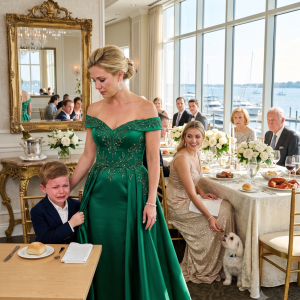
The Weekend My Children Were Told They Weren’t “Special”

The House by Cedar Lake
The trouble began with a platter of grilled steaks, although by then the real trouble had been growing quietly inside our family for years.
My name is Lydia Bennett, and at the time I was thirty-seven, living outside Grand Rapids, Michigan, with my husband, Aaron, and our two children, eleven-year-old Noah and eight-year-old Emily. We were an ordinary white Midwestern family, at least from the outside, and I earned most of my income restoring antique furniture and creating custom wooden pieces for weddings and family homes.
That May, I had planned a peaceful weekend at a cottage near Cedar Lake. The property had belonged to my parents, who had transferred it to me before Aaron and I were married. It was where I had spent my childhood summers, where my father taught me to fish, and where my mother had sewn the blue curtains that still hung in the largest bedroom.
I packed chicken, vegetables, potatoes, fruit, and enough food for two days. The children were excited about sleeping in a tent behind the cottage, and I had promised that we would build a small campfire and toast marshmallows after sunset.
An hour before we left, Aaron called from work.
“I invited Meredith,” he said, using the careful tone he adopted whenever he had already made a decision and wanted me to accept it. “Her weekend plans fell through, so she and Russell are coming with the kids.”
Meredith was Aaron’s older sister, a woman who could turn an ordinary conversation into a contest without appearing to raise her voice. She criticized my clothes, my business, my parenting, and even the neighborhood where our children attended school. Whenever I complained, Aaron gave me the same tired response.
“That’s just Meredith. Don’t let her get to you.”
When we reached the cottage, Meredith’s sport utility vehicle was already parked beneath the maple trees. She had arrived early and claimed the largest bedroom, placing her expensive luggage on the quilt my mother had made.
“Meredith, that room is usually for Aaron and me,” I said.
She barely looked up.
“We’re the guests. Giving us the nicest room seems like basic hospitality.”
I turned toward Aaron, waiting for him to correct her, but he became extremely interested in carrying bags from the car. As I had done so many times before, I surrendered the room because resisting Meredith always created a longer argument than accommodating her.
That afternoon, she examined the groceries I had purchased and held up a package of sausages as though she had discovered something embarrassing.
“You actually feed these to the children?”
“They’re for the campfire,” I replied.
Meredith laughed and opened the back of her vehicle. She had brought thick steaks, expensive cheeses, fresh asparagus, and bottles of imported sparkling water. She arranged everything across the kitchen counter with the pride of someone displaying trophies.
Her children followed her example. Fourteen-year-old Connor told Noah about his private soccer coach, while ten-year-old Madison showed Emily photographs of the country club swimming pool. My children listened politely, but their excitement faded. Within an hour, they no longer behaved as if they were visiting their own family cottage. They moved carefully, asked before touching anything, and seemed to believe that Meredith’s family had somehow become the rightful owners of the weekend.
Near sunset, Russell started the grill. When the steaks were ready, Meredith took charge of serving them.
“This one is for Connor because he’s training,” she said. “Madison needs a good portion too. Russell gets the largest one, naturally, and Aaron can have this.”
She placed another steak on her own plate, then pointed toward the sausages I had brought.
“Those should be enough for Noah and Emily. Lydia can make them pasta if they’re still hungry.”
I stared at her, certain I had misunderstood.
“There are enough steaks for everyone.”
Meredith gave me the patient smile she used when pretending that cruelty was common sense.
“My children need quality protein. Yours aren’t so special that they need everything my children have.”
The entire table fell silent.
Noah lowered his eyes and pressed his hands together beneath the table. Emily’s lower lip trembled, and within seconds tears were moving down her cheeks.
I waited for Aaron to speak. This was his sister, his children, and the moment in which any decent father should have drawn a line without needing to be asked.
Instead, he shifted uncomfortably and gave a nervous laugh.
“Lydia, please don’t turn a piece of meat into a family crisis.”
In that instant, I understood something I had resisted understanding for a long time. Aaron was not merely afraid of conflict. He had decided, over and over, that his comfort mattered more than the cost his silence imposed on the children and me.
The Price of Keeping Quiet
I took Noah and Emily into the kitchen and prepared roasted potatoes with mushrooms and chicken. Laughter drifted through the screen door while Meredith praised Russell’s cooking and Aaron agreed that the steaks were excellent.
Noah pushed a potato around his plate.
“Dad heard what she said, didn’t he?”
“Yes,” I answered quietly.
“Then why didn’t he tell her to stop?”
I had no explanation that would comfort him without teaching him to doubt what he had plainly witnessed.
After the children finished eating, I found Aaron on the porch.
“Your sister told our children they were worth less than hers, and you defended her.”
“I didn’t defend anybody.”
“You told me to remain quiet. That protected her, not them.”
Aaron sighed.
“Meredith bought the steaks. You brought different food. Why does everything have to carry some deeper meaning?”
“Because she assigned food according to who she believed mattered. And she did it in my cottage.”
His expression tightened.
“Our cottage.”
“No, Aaron. Legally, it belongs to me. My parents transferred it before our marriage.”
His face changed briefly, but before he could answer, his phone lit up on the table. A message from Meredith appeared across the screen.