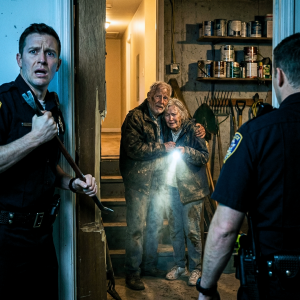
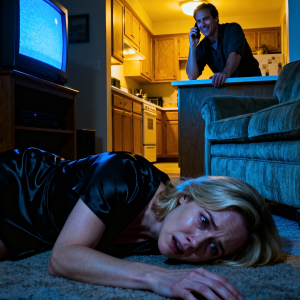
I slipped out the side gate just as the first police cruiser rolled down the street, lights flashing silently. Then another. Within minutes, the picturesque neighborhood swarmed with officers. I slid into my car, hands trembling. The phone vibrated again.
Are you safe? Do not return. I will explain later.
Before I could catch my breath, Harold’s number lit the screen. “Mom, where are you? The police are here asking questions about Clara, about her accounts. They are saying she has been using other people’s identities. But that cannot be true… right?”
I sat frozen as puzzle pieces began to shift into place. Her endless questions about my late husband’s estate. Her insistence on helping me with complicated online banking. The credit card applications she claimed would help me build senior credit.
“Harold,” I asked carefully, “did Clara ever handle my documents?”
He hesitated. “She sorted Dad’s papers last year. She told me you needed her help with bills too.” His voice cracked. “Mom… what if it is real?”
Another text appeared as I ended the call.
She tried to have you declared incompetent three months ago. I have the papers. She only stopped because Harold refused to sign.
The phone nearly slipped from my grasp. All the talk about my confusion, the suggestions that I struggled with technology, it had been deliberate.
The next morning, at Riverside Green near the duck pond, I met the sender. A woman named Teresa sat down, her hair cut short, eyes heavy with fatigue. “Until last year, I was Clara’s partner in a consulting firm,” she said, handing me a folder. Inside were copies of my Social Security card and forged applications in my handwriting.
“She targets widows,” Teresa explained. “Grieving women who will welcome help. She does not just marry for love. She marries for access.”
I felt sick. Teresa continued, voice low. “She even convinced my family I was unstable when I questioned her. That is her pattern. She undermines credibility. And two women who pushed back did not live long afterward.”

When I told Harold, his face crumbled. He whispered, “Our first date… she asked about you, about Dad. I thought she cared.” He laughed bitterly. “She was studying us.”
Together we gave the police everything. Teresa’s records, my statements, Harold’s testimony. The case uncovered dozens of victims across several states. Clara eventually pled guilty. She signed away her rights to the children without hesitation, as though they had only ever been part of her cover.
It took months to rebuild. Explaining to Sophie and Lucas why their mother would not be coming home was heartbreaking. But in time, life took a gentler shape. Harold moved with the children into a smaller house, one filled with laughter instead of tension. I was no longer a visitor treading carefully. I was their grandmother, present and wanted.
One bright Saturday the following year, as Lucas shouted for me to push him higher on the swing, I realized what we had salvaged. Betrayal had gutted us, but from the wreckage came something stronger. Family rebuilt not on illusion but on honesty and fierce loyalty.