It was a gray autumn morning when people in the small town of Valea Veche first noticed the dog. It was a beautiful Mioritic shepherd, its thick white fur standing out against the cemetery’s gloom. The dog sat perfectly still beside a freshly placed wooden cross, eyes locked on the newly dug grave.
“That’s Santa’s dog,” someone whispered. “Poor thing doesn’t know his master isn’t coming back.”
They were talking about Moș Gheorghe, who had been buried just three days earlier. The old man had lived alone on the edge of town, and the dog—known by everyone as Ursu—had been his only companion. After the funeral, people assumed the dog would wander off and find somewhere else to stay.
But Ursu never left.
Every day, the townspeople would see him in the same spot, sitting by the grave. He barely moved. Some kind souls brought him food and water, but Ursu hardly touched it. His eyes carried a deep sadness that only he seemed to understand.
“That’s a dog’s loyalty,” said the town’s elders. “He’ll stay there until his heart gives out.”

Maria, the schoolteacher, passed by the cemetery every day on her way to work. Each morning, she left food for Ursu and spoke to him softly. After a week, she noticed something new: Ursu wasn’t just sitting anymore—he was digging. At first it was subtle, but then he became more focused, digging more each day near the cross.
“He probably smells his master and is trying to reach him,” someone guessed.
But Ursu’s digging grew more frantic. Ten days after the burial, Maria saw that the hole was getting deeper and more deliberate. Ursu wasn’t just scratching the surface anymore—he was digging like he had a goal. His fur was matted with dirt, his paws raw and bleeding, but each morning before sunrise and each night after everyone left, he returned to dig.
That morning, Maria stood by the grave with a coffee thermos in one hand and her school bag in the other, watching Ursu in silence. She bent down and whispered:
— Bear… what are you trying to tell us?
Ursu didn’t look up. He just kept digging.
By afternoon, word had spread across Valea Veche. People began to gather near the cemetery fence, whispering. Some said it was just grief. Others were starting to get uneasy.
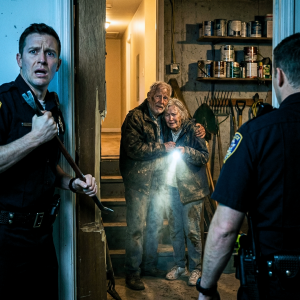
That evening, Maria came back with her cousin, Deputy Officer Tudor Lupu—a kind-hearted but cautious man who took his duty seriously. He hadn’t contacted the police chief yet, but he knew they might need someone with the authority to handle whatever was about to unfold.
Tudor leaned over the grave, checking the area carefully. The wooden cross wobbled slightly, and the smell coming from the freshly turned soil didn’t seem right.
“I hate to break it to you, Maria, but if things continue like this, we’re going to have to open the grave,” he said.
Maria nodded. “I know. Something’s wrong.”
The next morning, with the mayor’s hesitant approval and a county official watching, they opened the grave.