Curiosity dragged me to the shop the next morning. Frank’s partner, a wiry woman named Samira, was waiting with coffee that tasted like burnt tar and old memories.
“He told me you’d come,” she said, sliding a folder across the counter.
“He started a scholarship last year—the Orange Ribbon Grant. First award goes out next month. He wanted you to help choose the student.”
Me? Choosing a scholarship winner? I almost laughed. I had spent years rolling my eyes at the grease under Frank’s nails. Now I stood there, breathing in the smell of gasoline and quiet generosity.
Samira pointed at a bulletin board crowded with photos: kids clutching giant checks, convoys of medical supplies, teens learning to change oil. “He used to say, ‘Some folks fix engines. Others use engines to fix people.’”
A week later, still numb but starting to thaw, I tied his orange bandana around my head. I climbed onto the Harley. Samira had taught me the basics in the parking lot—stalling, wobbling, almost dropping the bike. But today felt different.
Hundreds of riders gathered for the hospital charity run Frank once led. A gray-haired vet approached, holding out the ceremonial flag.
“Will you take point?” he asked.
I hesitated—until a small voice spoke up. “Please do it,” said a girl in a wheelchair, an orange ribbon in her hair. “Frank promised you would.”
I swallowed hard, took the flag, and rolled forward. The rumble behind me felt like thunder and prayer. We rode slow, ten miles to Pine Ridge Children’s Hospital, orange ribbons waving along the sidewalks.

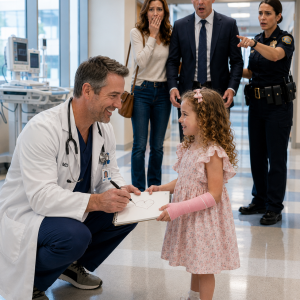
At the hospital entrance, Samira handed me an envelope. “Your dad raised enough last year for one child’s surgery. Today, the riders doubled it.” Inside was a check for $64,000 — and a surgeon’s letter approving the little girl’s spinal operation.
Samira smiled. “Will you sign it, Mister Frank’s Son?”
For the first time since the funeral, my eyes filled with tears. “Call me Frank’s kid,” I said, signing my name. “Feels like I finally earned it.”
Later, as riders swapped stories over lukewarm coffee, the hospital director pulled me aside.
“You should know,” she said, “your father once turned down a machinist job at a medical company — it paid three times what he made at the shop. He said he couldn’t take it. Your mother was sick. He needed time to care for her.”
I shook my head, stunned. My mother died of leukemia when I was eight. All I remembered was Frank rubbing her feet at night, missing work to drive her to chemo. I used to think he stayed at the shop because he lacked ambition.
Turns out, he gave it up — for us.
That night, back in my childhood room, I reread his letter. His words felt like a map, sketched in grease pencil, showing the road ahead. My business degree suddenly looked small next to his balance sheet of compassion.

I made my choice. I sold half the scholarship fund to buy the adaptive machines Samira had dreamed of. The shop stayed open—but now, one bay became a free program for at-risk teens. We would teach them to fix bikes—and maybe fix parts of themselves too.
Three months later, on Frank’s fifty-ninth birthday, we launched the first class. Ten kids, a battered whiteboard, greasy pizza, and a spark plug–shaped cake. Under a banner that read Ride True, I told them about a mechanic who measured life by lives mended, not money earned.
At noon, when Saint Mary’s bells rang, a veteran rider pressed something into my hand: My dad’s old orange bandana, washed and neatly folded.
“He said highway miles belong to anyone brave enough to ride them,” he whispered. “Looks like you’re ready.”
I used to think titles earned respect. Turns out, it’s who you lift that matters.
If you’re reading this on a crowded train or a quiet porch— Call home while you can. Hug the ones who embarrass you. Their courage might be the engine you’ve been looking for.