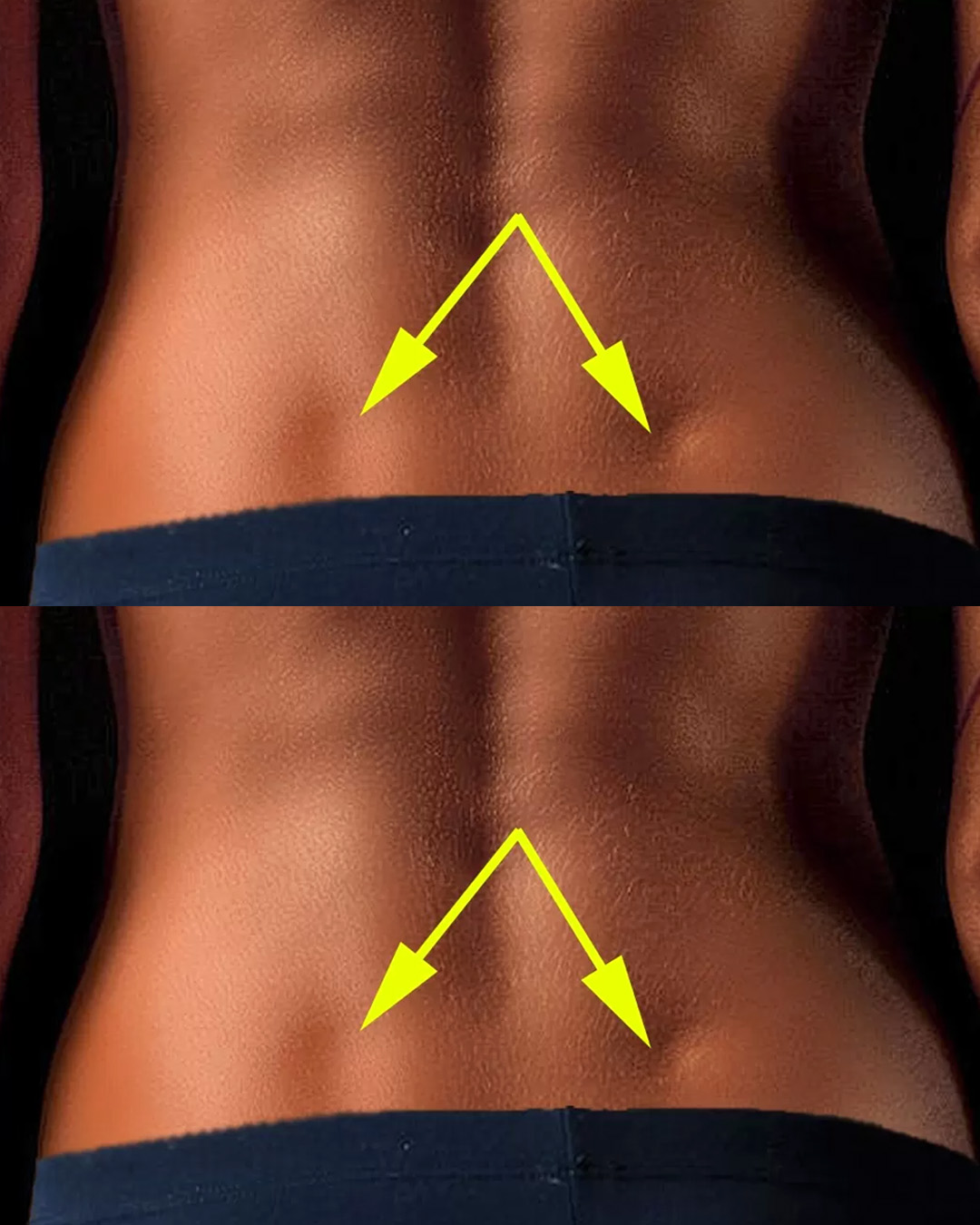
They often go unnoticed, nestled just above the buttocks, yet… some people find them alluring, while others wonder: why doesn’t everyone have them? Their meaning goes beyond just how they look. What these two little indentations reveal about your body might surprise you…
So, where do these hollows in the lower back come from?

Known as Venus dimples in women and Apollo dimples in men, these small indentations appear where the skin directly attaches to the iliac bone, a part of the pelvis. They aren’t muscles, nor are they the result of intense physical training. In fact, they’re simply a hereditary trait: you either have them from birth, or you won’t have them at all, regardless of how you live your life.
Think of these dimples as the small “openings” of your pelvis. If your body structure aligns with the “right codes,” they naturally emerge. A slimmer figure might make them more noticeable, but they aren’t a sign of being thin.
A natural charm inspired by the gods

The name isn’t by chance. In mythology, Venus, the goddess of love and beauty, symbolized bodily harmony. These dimples were seen as a sign of physical perfection. They continue to captivate today—a subtle detail that draws attention and enhances the elegance of the lower back.
But their allure isn’t limited to looks alone. Some experts believe these dimples might indicate good muscle tone and skin elasticity, much like subtle signs of a well-balanced body.