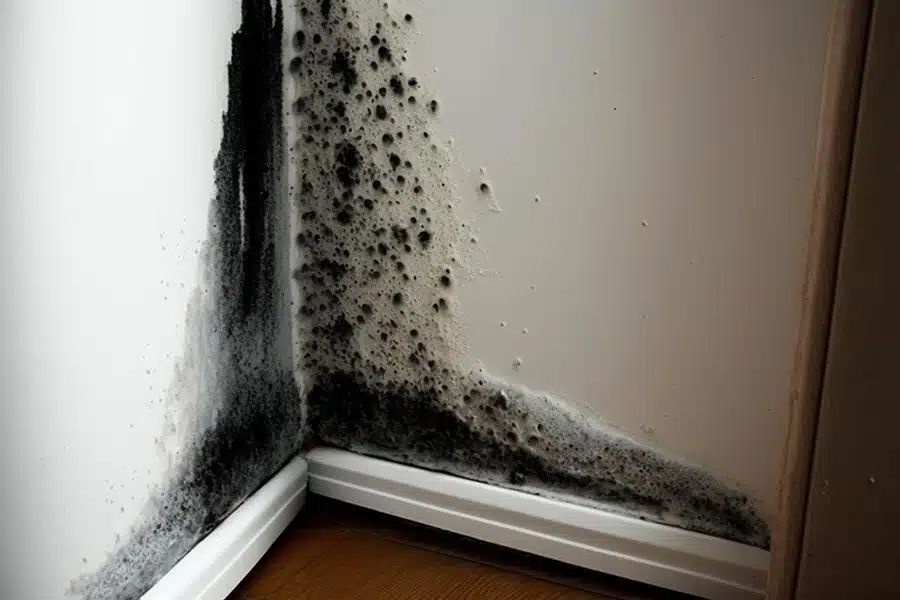
Have you ever spotted a tiny black mark in the corner of your wall and brushed it off as dust? Over time, it spreads, darkens—and suddenly, the room smells musty. That “smudge” could be mold, quietly growing behind your walls.
The good news? You can catch it early and stop it fast. Simple steps can protect your home—and your health—before it gets worse.
So, Why Are These Black Spots Appearing? (Spoiler: It’s Not Just About Cleaning)
When walls start turning black, especially in corners, it’s often a sign of moisture buildup, not just dirt. Poor airflow in rooms like bathrooms, kitchens, or closed bedrooms allows humid air to settle on cold walls, creating ideal conditions for mold.
Sometimes, the problem is external, like a leaking roof, blocked gutter, or water seeping in from the ground. Damaged walls can also let moisture in. Poor insulation, particularly where indoor and outdoor temperatures meet (thermal bridges), can cause condensation buildup.
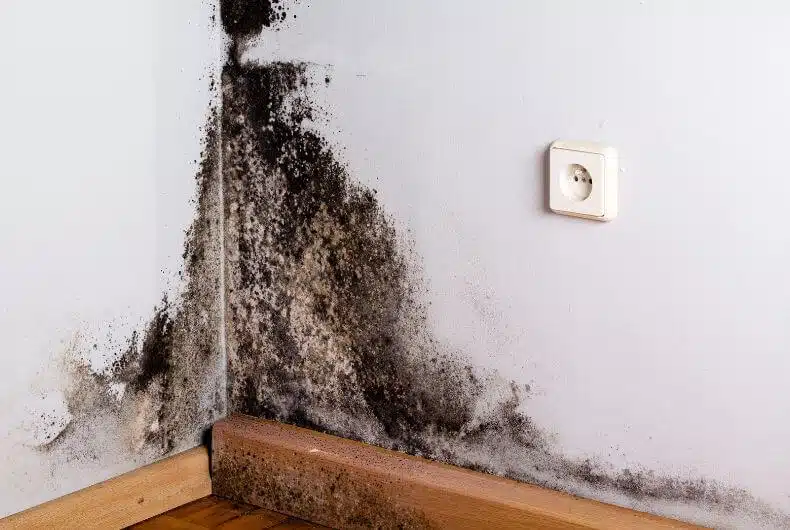
Even furniture pressed against walls can trap moisture, allowing mold to grow unnoticed. According to France’s ANAH, 1 in 5 homes experiences moisture issues. If you’re seeing these signs, you’re not alone.
Pro tip: Don’t ignore those hidden corners. They’re often the first to show signs when something’s off.
What Should I Do Right Away to Keep It from Getting Worse?
Act quickly when you spot mold to prevent it from spreading.
- Open windows for 10 minutes daily to improve airflow and reduce moisture.
- Clean mold with a mix of warm water and white vinegar; use hydrogen peroxide for tougher mold. Avoid vinegar on natural stone or marble.
- Move furniture away from walls to improve air circulation.
- Use a moisture absorber or small dehumidifier to control humidity.
Bonus: In winter, crack windows twice a day to clear condensation.
Extra tip: Add tea tree oil to your cleaning solution for a pleasant scent and antifungal properties!