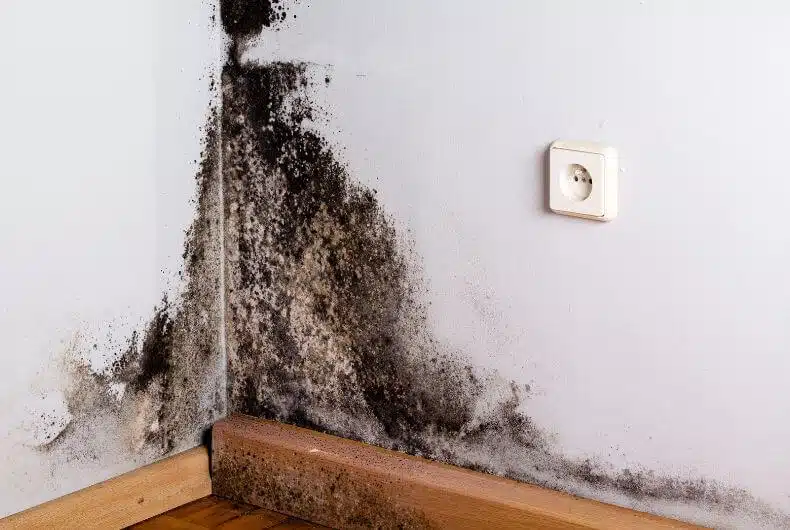
Have you noticed a small black spot in the corner of your wall? At first, you might think it’s just some dust or an old mark… but as days go by, it spreads, darkens, and sometimes even starts to smell musty. This is more than a trivial issue. These stains are often a sign that something is going on behind the walls. But don’t panic—by taking the right steps, you can minimize the damage and restore a healthy environment in your home.
Why do these black spots appear? (It’s not just a cleaning problem)
A wall turning black, especially in a corner, is rarely just a cleanliness issue. More often than not, it’s excess moisture that’s causing it.
In poorly ventilated rooms—like a bathroom where steam gets trapped, a kitchen with no ventilation, or even a bedroom that’s hardly aired out—moist air has nowhere to escape. It condenses on the cold walls… and that’s when mold sets up shop.
It could also be due to leaks from the outside. Overflowing gutters, a damaged roof, porous walls, or even water rising from the foundation can all lead to those annoying stains.
Sometimes, it’s the insulation that’s causing trouble. A “thermal bridge”—a spot where the temperature difference between indoors and outdoors is significant—can create a cold area where moisture easily builds up.
One small detail we often overlook: furniture pushed too close to the wall. Without room for air circulation, humidity stagnates, allowing mold to quietly take root behind your sofa or dresser.
According to ANAH (National Agency for Housing and Housing), one in five homes in France shows signs of persistent dampness. So, you’re not alone in this situation.
Pro tip: Don’t ignore those hidden corners—they’re often the first to show signs when something isn’t right.
What can I do right now to stop it from getting worse?
As soon as you spot a dark spot, don’t wait for it to spread. The sooner you act, the more you can limit the damage.
Start by airing out the room thoroughly, both morning and evening, even if it’s chilly. Ten minutes is all it takes to refresh the air and reduce moisture. This is especially important in humid areas like bathrooms or laundry rooms.
Next, tackle the stains. A mix of warm water and white vinegar can do wonders. For tougher mold, hydrogen peroxide is another effective option. But be careful: don’t use vinegar on natural stone or marble surfaces as it could damage them.
Don’t forget to move furniture away from the walls, even just a few inches, to allow air to circulate. It can really make a big difference.
If the air remains humid despite your efforts, consider using a moisture absorber or a small dehumidifier. It can work wonders, especially in small spaces.
Bonus tip: In winter, open your windows for just a few minutes in the morning and evening. This helps clear up any condensation that has built up overnight.