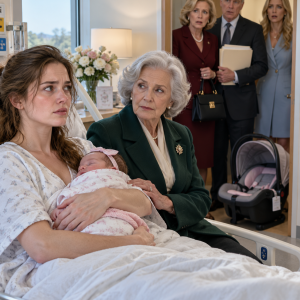
The investigator added the video to the case and conducted new interviews.
An aunt admitted that Mitchell had once locked his own children in a dark bedroom during a dinner because he believed they were being too loud. Patrick described seeing him shake a teenage nephew by the shoulders after the boy laughed at an innocent joke. Another cousin explained that Mitchell had broken her daughter’s phone after the girl tried to record him insulting a restaurant employee.
As more stories surfaced, Allison was forced to examine her own silence.
She remembered holiday dinners when she quietly cleaned up objects Mitchell had thrown. She remembered advising younger relatives not to argue with him because that was simply how he behaved. She remembered comforting Rebecca after the incident with Owen while also asking her not to make a decision she might regret.
At the time, Allison had believed she was keeping the peace.
Now she understood that peace built around one person’s anger was not peace at all. It was merely obedience with better manners.
The protective conditions remained in place. Mitchell was required to attend a psychological evaluation and participate in an anger-management program while the matter moved forward.
Allison gave copies of the protective paperwork to Sophie’s preschool. She provided photographs of Mitchell, Diane, and Robert and made the instructions clear: none of them were permitted to collect her daughter.
Diane responded with a six-page letter explaining Mitchell’s childhood, his disappointments, and the pressure he carried as the family’s oldest son.
She did not ask once how Sophie was doing.
Robert sent a shorter message.
“One mistake should not destroy a family.”
Allison saved both without replying.
Several weeks later, she agreed to attend a mediated meeting with Mitchell. She did not go in search of reconciliation. She went because she wanted to hear whether he could finally accept responsibility without blaming anyone else.
He looked tired when he entered the room, and his usual confidence seemed thinner.
“I made a mistake,” he said.
Allison studied him.
“Are you sorry Sophie was hurt, or are you sorry there were consequences?”
His jaw tightened.
“I lost control for one second. I’m not some kind of monster.”
“Nobody called you that. But you frightened a little girl, and people have been covering for you for years.”
Mitchell struck the tabletop with his palm.
“Nobody understands what all of you make me feel.”
The mediator became still.
Allison reached for her purse.
“That is exactly what we understand now. You believe your feelings give you permission to make everyone else afraid.”
She left without another word.
It was the last conversation she had with her brother.
A Different Kind of Family
In the months that followed, Allison’s parents continued trying to weaken the case. They offered to help Rebecca with an overdue loan if she would revise her statement.
Rebecca recorded the conversation and gave it to the investigator.
When Diane called Allison from another relative’s phone, her voice was exhausted and bitter.
“How far are you willing to take this?”
“As far as I need to so you stop protecting him.”
“He is my son.”
“Sophie is your family too.”
Diane had no answer.
Some relatives stopped speaking to Allison. They said she had exposed private matters and embarrassed people who had never harmed her personally.
Others began calling quietly.
A cousin spoke about growing up afraid of Mitchell’s temper. An aunt apologized for looking away at Robert’s birthday party. Patrick admitted that he had spent years telling himself it was not his place to interfere.
One afternoon, a fifteen-year-old relative named Madison asked to speak with Allison alone.
“I thought when grown-ups got angry, kids were supposed to stay quiet and wait for it to be over.”
Allison knelt so they were at eye level.
“You never have to accept being hurt just because an adult is angry.”
The formal process moved slowly, and the family never returned to what it had once been. But Allison no longer believed returning was the goal.
A year after the birthday gathering, Sophie turned three.
Allison held a small party in the shared garden behind her apartment building. Rebecca came with Owen, along with several relatives who had supported them. There were cupcakes, bubbles, paper flowers, and bright ribbons tied to the low branches of a maple tree.
In the middle of a game, Sophie knocked over a cup of pink lemonade.
The drink spread across the patio.
Sophie froze.
Her shoulders rose, and she looked from one adult to another, waiting for anger.
Rebecca crouched beside her and smiled.
“It’s okay, sweetheart. It was an accident.”
Sophie turned toward her mother.
Allison opened her arms.
“You’re not in trouble. Go play.”
The little girl hesitated only a moment before running back toward the ribbons, laughing as they lifted in the breeze.
Allison watched her daughter reach for one without flinching.
For months, people had accused her of destroying their family. They said she had chosen outsiders over loyalty and punishment over forgiveness.
But standing in that garden, Allison understood the truth with a clarity she had never felt before.
She had not destroyed her family.
She had interrupted a silence that had been wearing them down for years.
And perhaps, in time, the people who remained would learn that love did not mean hiding what happened, protecting the person who caused fear, or asking a child to carry the cost of everyone else’s comfort.
Sometimes love meant speaking plainly.
Sometimes it meant leaving the room.
And sometimes it meant showing a little girl that when she reached toward something beautiful, no one had the right to make her afraid.