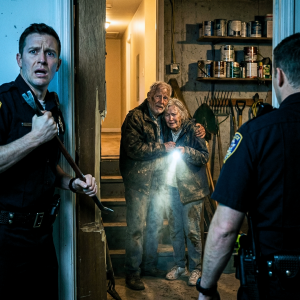
I unlocked the door and made my way downstairs. My phone was on the counter. They didn’t notice me at first.
When they did, Jenna gasped. “Sweetheart, what are you doing out of bed?”
Collins jumped up. “How the hell did you—”
I grabbed my phone and locked myself in the bathroom, calling my sister.
“Mia? I need you. Bring James. And the police.”
Ten minutes later, the knock came.
Collins greeted the officers, trying to play it off. “Is there a problem?”
I stepped out with Mia. “Yes. I’ve been locked in a room. Against my will. This”—I held up the contract—“is proof.”
Jenna’s voice trembled. “It was a misunderstanding! She’s recovering!”

“Just what?” the officer cut in. “Controlling her finances? Locking her in?”
Collins muttered, “She agreed—”
“No,” I said firmly. “Leaving a pen is not consent.”
The officer turned to me. “Would you like to leave with your sister tonight?”
“Yes. And I’m pressing charges.”
That night, I slept at Mia’s, wrapped in a real blanket. Two days later, I filed for divorce.
Six weeks after I left, Collins tried to contest it. Claimed I abandoned him and Jenna. Cited “loss of domestic support.”
James, my brother-in-law (and a lawyer), filed a brutal counterclaim—with the contract, screenshots of Collins’ texts, 911 logs, and my ER report.
The judge didn’t hesitate. Collins lost.

Then he lost his job. HR didn’t appreciate an employee locking his injured spouse in a room. “Terminated due to ethical misconduct.”
And Jenna? She got evicted. Collins was the only one on the lease.
I heard they’re now living in her sister’s basement.
Last week, I ran into Collins at the pharmacy. He looked drained and muttered, “You really ruined my life.”
I smiled.
“No,” I said. “You just didn’t think I had one without you.”