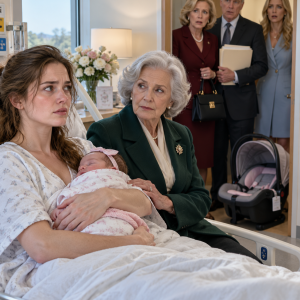
Megan did not feel victory.
She felt tired.
Because there is no joy in proving that someone who sat at your table, ate your food, and smiled at your husband had been waiting for your life to fall apart.
The Apology That Came Too Late
After the hearing, Blake approached her again.
This time, he did not look angry. He looked broken.
“I’m sorry,” he said.
Megan studied him.
“For what?”
He looked confused.
“For not believing you. For letting it happen.”
“Yes,” she said. “You did let it happen.”
“I want to fix it.”
Megan shook her head slowly.
“Some things do not get fixed. They get accepted.”
“Do you still love me?”
The question came too late.
Megan looked toward the door where her father was waiting.
“For years, I loved you more than I loved myself. That was my mistake.”
Then she walked away.
Months later, the court issued its decision. The divorce was granted. The townhouse and marital assets would be divided with consideration of Megan’s documented contributions. Certain payments that had benefited Blake’s family would be considered in the financial settlement. Support for the baby would be addressed according to the law after birth.
Megan cried in Rachel’s office.
Not from fear.
From relief.
Rachel smiled gently.
“Your life is not over, Megan. Only the part that was draining you is over.”
Outside, the afternoon air smelled like rain. Megan placed a hand on her belly.
“We’re free now,” she whispered.
The baby moved.
A Life That Belonged To Her
Blake sent the money he was ordered to pay. He also sent one message.
“I will do right by the baby. I regret everything.”
Megan replied:
“Received.”
Nothing more.
Tara called several times. Megan never answered. She heard through mutual acquaintances that Cooper had changed schools, Judith had stopped defending Tara so fiercely, and Blake no longer covered Tara’s bills.
Megan did not celebrate.
Some people are not sorry for what they did. They are sorry when the result finally reaches them.
With the settlement money and her parents’ support, Megan started a small meal-prep business from her mother’s kitchen. At first, the orders were simple: chicken pot pie, baked pasta, soups, casseroles, and birthday cakes.
Then word spread.
Her food tasted like comfort. Her service was kind. Her customers came back.
One afternoon, while labeling containers, Megan felt a strong kick.
“I know, I know,” she laughed, touching her stomach. “You want an opinion too.”
Elaine watched her from the kitchen table.
“I have not heard you laugh like that in a long time.”
Megan froze for a moment.
It was true.
She had not gotten her old life back.
She had built a new one.
And this one belonged to her.
Her daughter was born on a rainy morning in March. Megan named her Lillian.
When the nurse placed the tiny baby on her chest, Megan cried harder than she had cried on the night she left Blake.
Not because she was broken.
Because she was grateful.
“Welcome, my love,” she whispered. “You will never have to ask permission to matter.”
Weeks later, Blake met Lillian under the legal agreement. He arrived with flowers and a face full of regret.
Megan accepted the flowers politely.
He looked at the baby, and his eyes filled.
“She’s beautiful.”
“Yes,” Megan said.
Before he left, Blake whispered,
“I lost too much.”
Megan adjusted Lillian’s blanket.
“No, Blake. You let go of what you were supposed to protect.”
He lowered his head and walked away.
Megan did not hate him.
That, too, was freedom.
A year later, her business had a small storefront near the farmers market. A framed photo of Lillian sat beside the register. Elaine helped on busy mornings. Russell delivered orders and insisted he only did it because retirement was boring.
Some nights, after Lillian fell asleep, Megan remembered that dinner in Naperville: the perfect table, the warm food, Tara smiling, Blake saying the word divorce as if a marriage could be thrown away in one sentence.
Then Megan looked at her daughter and understood the truth.
The worst night of her marriage had also been the first night of her freedom.
Because sometimes a woman does not lose a family when she leaves.
Sometimes, for the first time, she finally finds herself.
A woman who stays quiet for years is not weak; sometimes she is simply collecting the strength, the proof, and the courage she will need when the day finally comes to choose herself.
The people who benefit from your kindness may be the first to call you selfish when you stop giving them access to everything you worked hard to build.
A marriage does not fall apart in one argument; it often falls apart in all the small moments when one person begs to be seen and the other keeps looking away.
When someone lets others disrespect you in the name of keeping peace, they are not protecting the family; they are asking you to disappear so everyone else can stay comfortable.
Love should never require you to pay for your place at the table, prove your worth every day, or accept humiliation just to keep a home together.
The truth does not always arrive loudly; sometimes it sits quietly in receipts, messages, records, and memories until the right moment comes for it to speak.
Leaving is not always the end of a life; sometimes it is the first honest breath after years of being trapped inside someone else’s version of who you were allowed to be.
A child should never be born into a home where their mother has to beg for dignity, and choosing peace before they arrive can be the greatest act of love.
Some apologies arrive after the damage is done, and while forgiveness may bring peace, it does not always mean opening the door to the same pain again.
The strongest women are not the ones who never cry, but the ones who cry, gather their papers, protect their children, rebuild their lives, and never again apologize for knowing their own value.