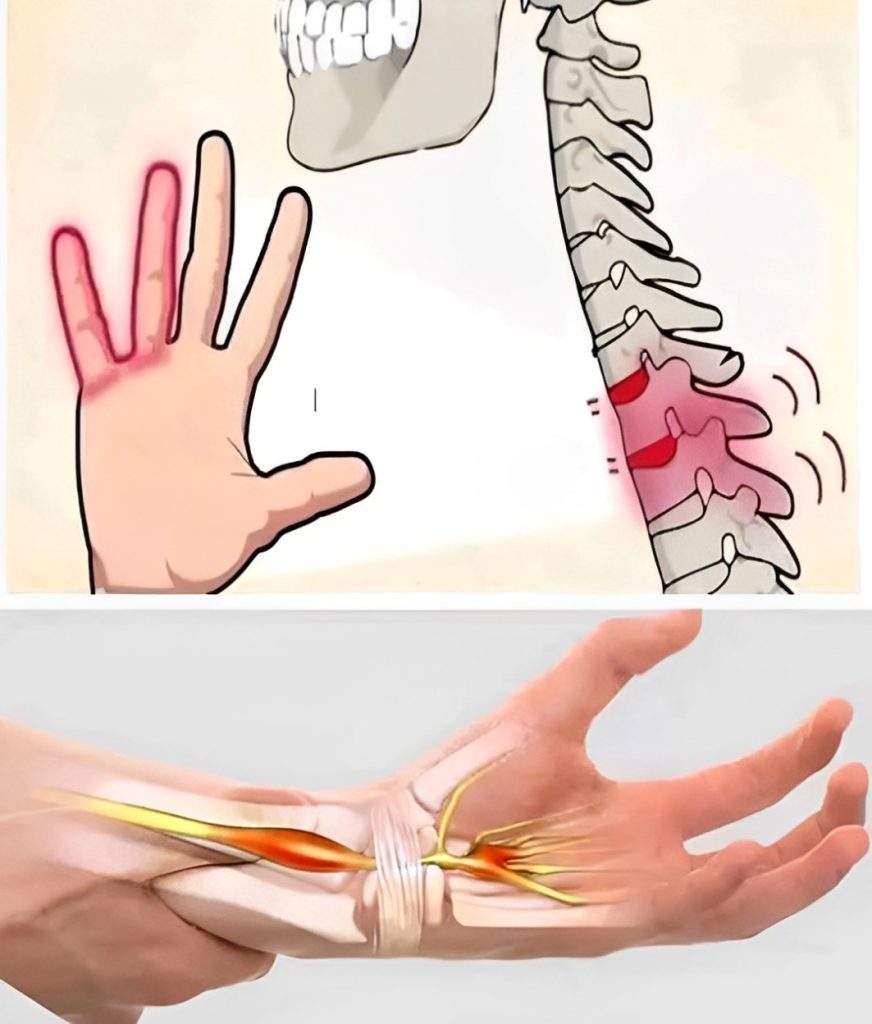
Tingling or numbness in your hands—often described as that “pins and needles” feeling—can either be just a fleeting annoyance or a sign of something more serious.
Sometimes it’s simply due to poor posture. Other times, it could point to an underlying health issue or imbalance. So, how do you know if it’s harmless or something that needs medical attention? Here are some of the most common causes to keep in mind.
1. Bad Sleeping Position: The Usual Suspect

We’ve all woken up with a numb hand after sleeping with an arm tucked under the pillow. That weird sensation—when your hand feels “dead”—happens because a nerve gets temporarily compressed, cutting off blood flow. Luckily, it usually fades in a few minutes after you shift your position.
Pro tip: Try using an ergonomic pillow and avoid tucking your arm under your head when you sleep.
2. Repetitive Motion: Watch Out for Carpal Tunnel
If you spend a lot of time typing, using tools, or doing any task that requires repeated hand movements, you might be at risk for carpal tunnel syndrome. This happens when the median nerve in your wrist gets compressed.
Signs to notice: tingling at night, hand pain, or reduced grip strength. If these sound familiar, it’s a good idea to talk to a doctor.
3. Vitamin B12 Deficiency: A Quiet but Important Issue

Vitamin B12 is crucial for healthy nerves. If you’re low on it—something that’s common among vegetarians or those with digestive issues like Crohn’s or gastritis—you might feel numbness or muscle weakness.
What to do: A simple blood test can check your B12 levels. If they’re low, supplementation is usually easy and effective.
4. Electrolyte Imbalance: When Minerals Go Off Track
Low or high levels of minerals like calcium, sodium, or potassium can mess with nerve signals and cause tingling. This might happen if you’re dehydrated or taking certain medications.
Smart move: Stay well-hydrated and see a doctor if the symptoms don’t go away.
5. Diabetes and Nerve Damage: A Common Complication
For people with diabetes, high blood sugar over time can damage peripheral nerves, leading to diabetic neuropathy. In fact, about half of all diabetics experience it.
Watch for: burning sensations, numbness, or a loss of feeling in hands or feet. It’s essential to get medical care early to help manage and slow down the condition.
6. Neck Issues: Signals Coming from Higher Up