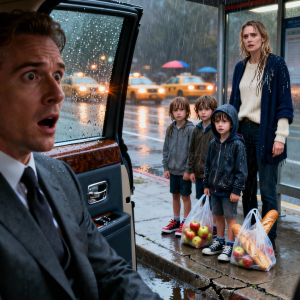
When the food arrived, the boys ate like they hadn’t had a full meal in days. Lydia fought tears. Every bite they took felt like a memory come alive.

“Do you remember your last name?” she asked quietly.
Noah stopped chewing. “Why? Are you with the police?”
“No,” Lydia said quickly. “I just want to help.”
Ian spoke softly. “We stayed with a man for a while. He said he took care of us, but he made us work. When we got too old, he said we cost too much and left us at the bus station.”
Lydia’s pulse roared in her ears. Her hands clenched around her napkin.
Minutes later, Samuel and Rosa entered the restaurant. Lydia raised her hand, her heart hammering. The boys saw the badge at Rosa’s belt and stiffened, ready to run. Rosa crouched beside the table, voice calm and low.
“I’m Rosa,” she said. “I help kids find safe places. Nobody here wants to hurt you.”
Noah’s eyes darted to the door. Ian’s hand gripped his sleeve. After a pause, Noah nodded.
“Would you come with us for the night?” Rosa asked. “You’d have warm beds, food, no questions you don’t want to answer.”
The boys exchanged a look, then agreed.
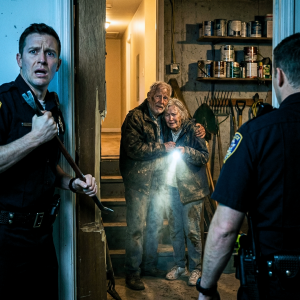
At the precinct, a social worker brought blankets and hot chocolate. Rosa collected quiet statements. Lydia waited in a small room, clutching her coffee until it went cold.
When blood samples were taken for DNA, she could hardly breathe. Hours dragged by. At last, Rosa returned, holding a single sheet of paper. Her eyes softened.
“They’re yours,” she said. “Both of them.”
Lydia covered her mouth, a sound breaking out of her that was half sob, half laughter. Samuel caught her as her knees gave way.
When Rosa told the boys, they didn’t rush into Lydia’s arms. They just stared, confused, frightened. They had lived too long in survival mode to trust something so good. But slowly, over the following weeks, walls began to crumble. Lydia showed them old photos, the tree, the dog, the house with the red roof. They remembered pieces at first, then whole stories.
There were tears, anger, and questions that no one could answer. There were nights of silence and mornings filled with tentative laughter. Healing came in fragments, not miracles. Yet one evening, as rain pattered against the windows, Ian fell asleep on the couch, his head on Lydia’s shoulder, and she knew they were finally home.
Months later, their laughter filled the kitchen again. They argued about homework, left shoes by the door, and fought over pancakes. The house that had once been a shrine to loss became noisy, alive, and real.
Life did not return to what it had been before, but it moved forward—one meal, one story, one heartbeat at a time.
If two hungry children stopped at your table, would you look away or look closer?
Sometimes the smallest act of kindness can open a door that grief has kept locked for years.