Part One: The Woman They Called an Intruder
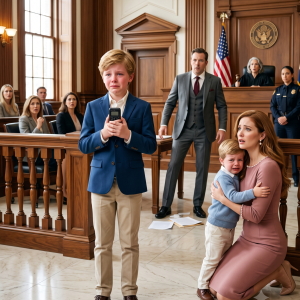
Five minutes before security dragged me across the Newport Maritime Museum floor, I had been standing beneath my biological mother’s portrait for the first time. Five hundred donors watched while my husband announced that I was an unstable trespasser suffering another dangerous delusion.
“Please remain calm,” Everett Shaw told the crowd, wrapping one arm protectively around Dr. Celeste Ward, the psychiatrist with whom he had been conducting a two-year affair. “My wife lost her school-counseling position after making reckless accusations against several families, and she now believes this museum belongs to her.”
His mother, Patricia, lowered her eyes with rehearsed sorrow. For four years, Everett redirected my salary, Celeste fabricated professional complaints, and Patricia repeated stories about my instability until colleagues interpreted every objection as evidence.
Three months earlier, fabricated complaints suspended my counseling license. Everett then changed our apartment locks and stored my belongings under his name.
I had believed I possessed no family capable of defending me because my guardian, Mae Bell, raised me as an orphan in a modest Providence duplex. After Mae died six days earlier, I found a fireproof box beneath her bedroom floor containing adoption records, letters, genetic reports, and an antique pocket watch engraved with the emblem of Mercer Maritime.
The documents identified me as Eleanor Mercer, the missing daughter of shipyard heirs Thomas and Katherine Mercer, who died in a suspicious boating accident thirty-four years earlier. Their estate had remained in trust because their infant daughter’s body was never recovered.
Mae rescued me after the collision, but corporate threats convinced her that revealing my survival would endanger us. She changed my name and waited for independent trustees.
I entered the museum gala intending to meet trust counsel Julian Hayes. Everett intercepted me near the portrait gallery before I reached him.
Now two private security contractors held my arms while Everett addressed the crowd like a patient husband burdened by public humiliation.
“Eliza needs protected treatment rather than encouragement from strangers,” he said. “Dr. Ward has obtained an emergency psychiatric order, and transportation is waiting outside.”
Celeste opened a leather folder displaying a commitment certificate. Two uniformed officers stood near the museum entrance, although their badges belonged to a small neighboring municipality rather than Newport.
I struggled to remain upright as Everett tightened his hand around my wrist.
“Tomorrow, Celeste will testify that you lack legal capacity,” he whispered. “Once I become your conservator, whatever inheritance Mae imagined will become marital property under my control.”
Patricia stepped closer and tore the strap of my handbag while pretending to restrain me. The pocket watch fell onto the floor, its cover opening beneath the chandelier light.
Museum collections director Walter Keene saw the engraving and raised his cane.
“Release that woman and close every exterior door,” he ordered. “That watch has not been seen since Katherine Mercer disappeared.”
The ballroom quieted. Walter had managed Mercer artifacts for forty years and recognized the lighthouse emblem Thomas engraved on only three personal objects.
Everett attempted to kick the watch beneath a table, but Walter reached it first.
“This is stolen property,” Everett insisted. “My wife invents identities and collects objects supporting her fantasies.”
Walter turned the watch over and read the tiny initials beneath the hinge: E.M., followed by my date of birth.
“No dealer knew this inscription existed,” he said. “Thomas showed it to me three days before the harbor accident.”
Part Two: An Order Signed by Nobody
Celeste recovered quickly and handed the commitment certificate to the two officers.
“An artifact cannot override a medical emergency. Ms. Bell has expressed grandiose delusions, threatened her husband, and entered a restricted event without authorization.”
I looked directly at the officers.
“Before you restrain me, please verify the issuing judge, docket number, examining physician, and facility authorized to receive me.”
One officer avoided my eyes while the other reached for handcuffs. Walter activated his radio and requested Julian Hayes, chief counsel for the Mercer Continuity Trust.
Celeste moved close enough for only me to hear.
“Do you truly believe Mae died naturally one week after requesting your birth certificate?” she whispered. “Everett crushed her heart medication into the tea Patricia delivered. The laboratory called it an ordinary cardiac event, and your death will look like another crisis inside a locked treatment center.”
My horror became visible before I could control it. Celeste smiled because she expected grief to produce the outburst her certificate described.
“You killed her,” I said, louder than intended.
Everett turned toward the guests.
“Everyone can see how rapidly her paranoia becomes aggression.”
The officers closed handcuffs around my wrists and began moving me toward a service corridor. Walter blocked them with his cane, but they threatened to arrest him for obstruction.
Before we reached the corridor, the museum lights brightened and a firm voice sounded from the mezzanine.
“Nobody leaves this building until the origin of that commitment order has been determined.”
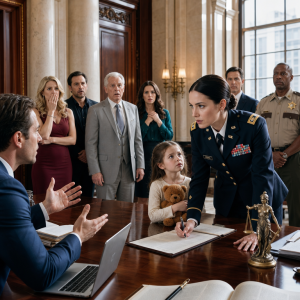
Julian Hayes descended with Rhode Island Superior Court Judge Rebecca Sloan, two state investigators, and Mercer Trust security personnel. Julian carried the sealed archive Mae’s attorney had delivered that morning.
Celeste held up the certificate.
“Judge Sloan, this patient presents an immediate danger, and interference could create liability for everyone involved.”
Sloan took the document and examined the signature.
“This order claims to bear my authorization, although I have never seen the petition, conducted the hearing, or signed this page.”
Color drained from Celeste’s face.
The judge checked the docket number, which belonged to a closed property dispute from three years earlier.
“Remove the restraints from Ms. Bell,” Sloan instructed. “Secure Dr. Ward’s documents and identify who requested police assistance on the basis of a forged judicial order.”