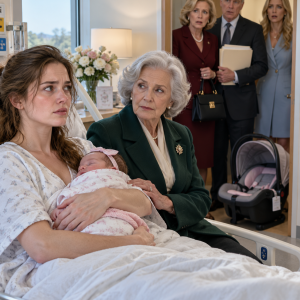
I named him Henry.
Thomas stayed beside us throughout the night. He never demanded forgiveness for the years we had lost, nor did he insult my mother for keeping us apart. He simply sat in a chair near the window, looking from me to his grandson as if he were afraid we might disappear.
On the third morning, he placed a tablet on the blanket beside me.
Mason was giving a televised statement outside the mountain lodge. He wore a dark coat and held a handkerchief near his eyes, though I could see no tears.
“Rachel was my entire world,” he told the reporters. “I watched her lose her footing. I tried to reach her, but the storm made a rescue impossible.”
Brooke stood behind him in a cream-colored coat, pretending to be a concerned colleague.
Thomas switched off the video.
“He filed the insurance claim twelve hours after returning to the lodge,” he said. “He also submitted a sworn statement saying he witnessed an accidental fall. This morning, he asked us to waive the normal investigation period.”
“Why would he think your company would agree?”
“He believes I’m only a name at the top of a building. He has no idea you’re my daughter, and he doesn’t know you were found.”
Mason had also announced a public memorial service at an historic chapel in Denver. He requested that a representative from Everly Risk & Assurance present the settlement authorization during the service, claiming it would allow him to establish a charitable foundation in my memory.
The arrogance of it left me strangely calm.
For years, I had been afraid of Mason’s silence, his anger, and the possibility that he might leave me. Lying in that hospital room with Henry sleeping beside me, I finally understood that the loss I had feared was actually freedom waiting to be accepted.
“Let him believe the claim is approved,” I said.
Thomas studied me carefully.
“What are you suggesting?”
“Prepare the documents. Make him confirm every detail in writing. Let him sign them in front of the guests, the cameras, and your claims officer.”
The authorization would be conditional, Thomas explained. No money would be released, but Mason’s signature would create clear evidence that he had knowingly filed false information.
Thomas’s expression softened with something that looked very much like pride.
“And after he signs?”
I looked toward my son.
“Then we attend the memorial.”
The Ceremony Mason Built for Himself

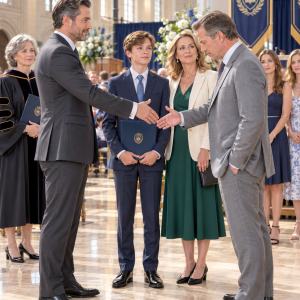
The Chapel of St. Matthew was filled with white roses, soft organ music, and nearly three hundred guests.
Mason had invited business partners, investors, elected officials, journalists, and anyone else whose sympathy might improve his reputation. A large photograph of me stood near the altar, selected from a charity dinner at which Mason had complained that my dress attracted too much attention.
He stood beneath it receiving condolences.
Brooke sat in the front pew wearing black, her expression solemn whenever someone looked at her and impatient whenever they did not.
At two o’clock, Everly Risk & Assurance’s senior claims director approached the altar carrying a leather portfolio. Several journalists lifted their cameras.
“Mr. Caldwell,” the director said, “before this conditional settlement can be finalized, you must verify that the information in your claim is complete and accurate.”
Mason glanced toward the guests.
“Of course.”
The director turned to the signature page.
“You are confirming that your wife fell accidentally, that you made every reasonable effort to assist her, and that you have no knowledge of any other circumstances contributing to her disappearance.”
Mason did not hesitate.
“That is correct.”
“You understand that knowingly providing false information may lead to federal charges and the cancellation of all benefits?”
“I understand.”
He signed with a silver pen, then looked toward Brooke. For a fraction of a second, satisfaction showed plainly on both their faces.
Mason reached for the portfolio.
The chapel doors opened behind him.
Winter sunlight spilled down the center aisle, and the organist’s hands went still.
I entered wearing a tailored navy suit, with Thomas walking beside me. A faint scar remained along my cheek, but I made no attempt to cover it. It was no longer something Mason had done to me. It was evidence that he had failed to erase me.
Whispers moved through the chapel.
Mason turned.
The confident expression vanished from his face.
“Rachel?”
I continued walking until I stood several feet from the altar.
“Hello, Mason.”
He gripped the edge of the podium.