What makes it different:
- Red, smooth, and shiny patches
- Gets worse with heat, sweating, and skin rubbing
- Higher chance of fungal infections
Unlike other types of psoriasis, there’s usually no flaking here. Instead, it feels like constant irritation – kind of like wearing wet clothes that keep rubbing on sore skin.
Pustular psoriasis: when the skin becomes inflamed
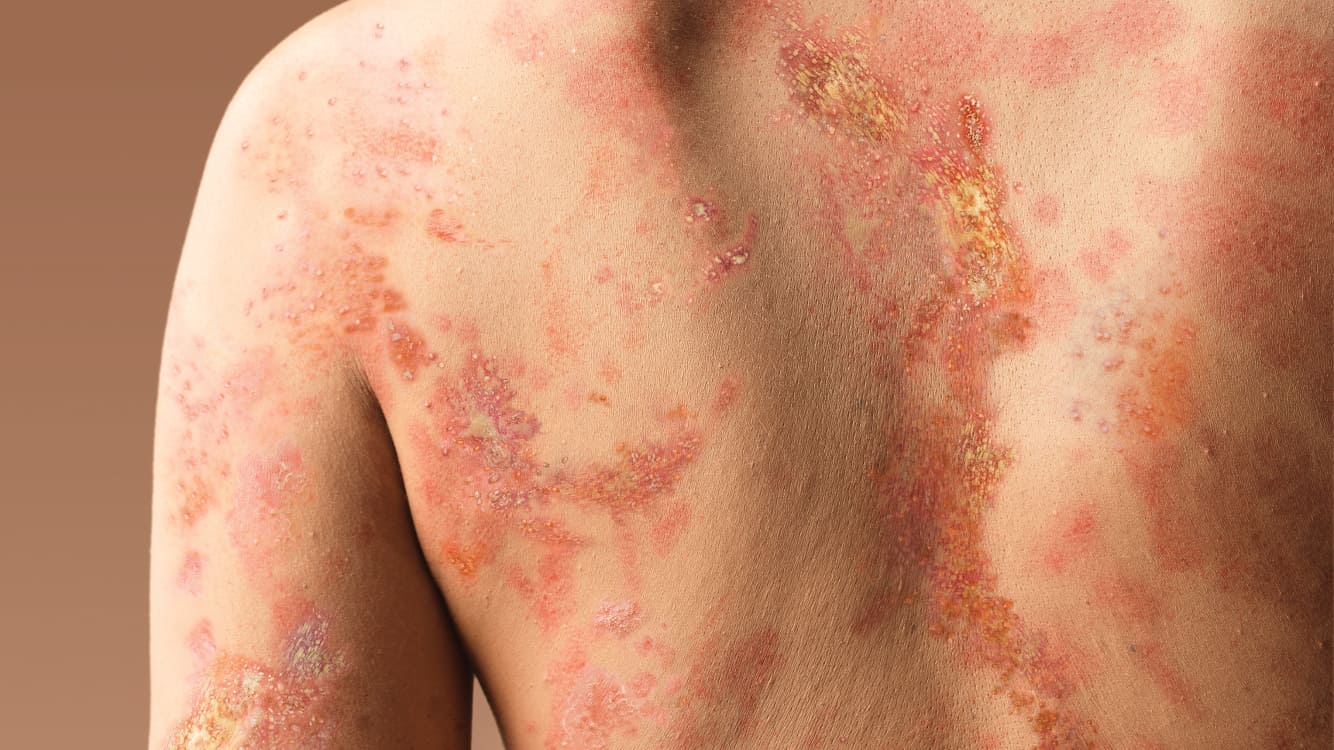
This type is less common, but it really stands out. You might see white blisters filled with pus (not contagious), surrounded by red, sore skin. It can show up just on certain areas like the hands or feet, or all over the body.
What to look out for:
- Painful pus-filled bumps
- Sometimes comes with fever and chills
- It’s important to see a doctor quickly
This is your body’s way of saying something’s wrong — don’t ignore it.
Erythrodermic psoriasis: the rarest, but also the most dangerous
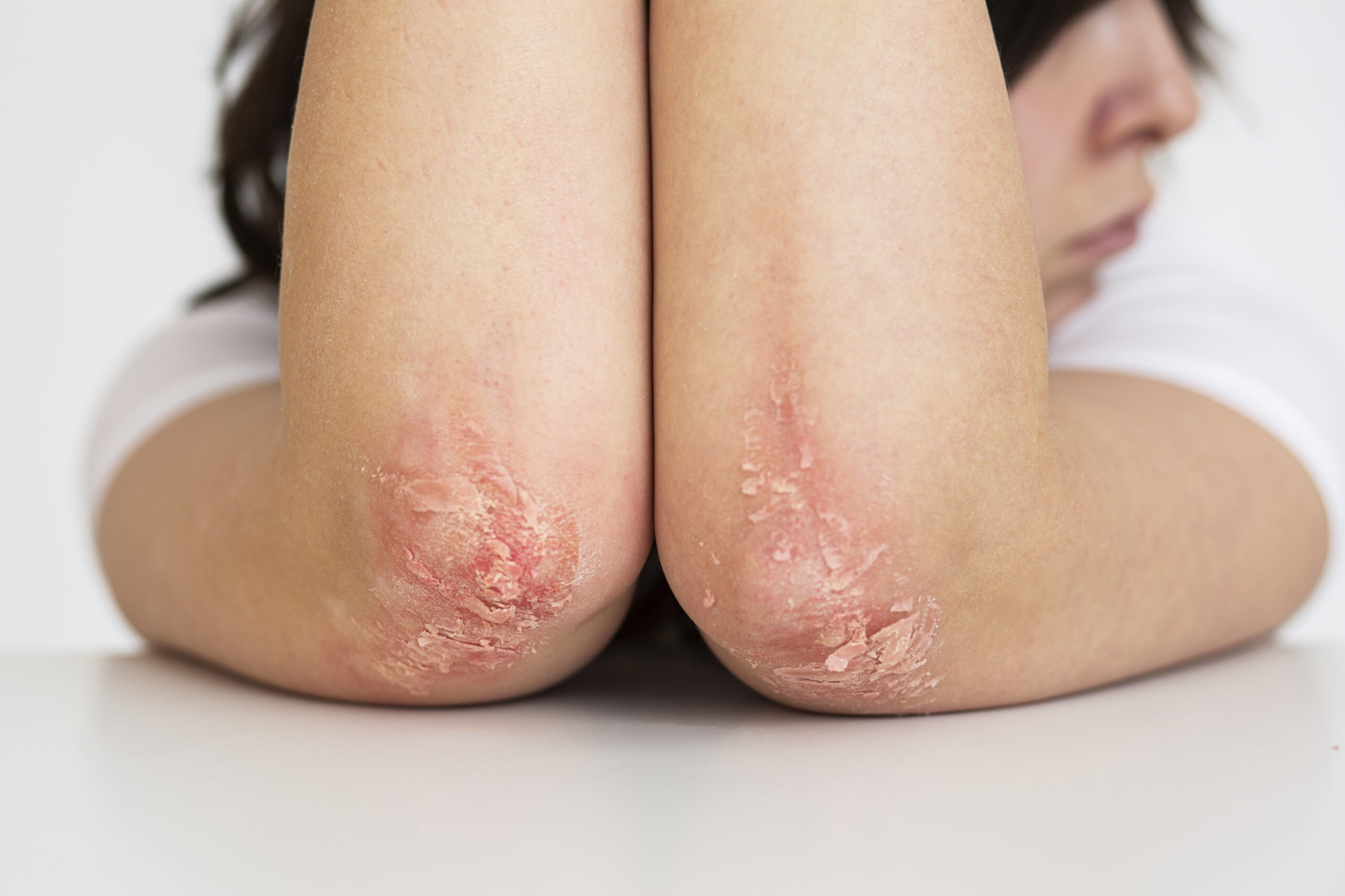
Imagine your skin becoming inflamed everywhere, like a big burn. It turns red, peels a lot, and hurts really badly: that’s erythrodermic psoriasis, and it’s an emergency.
Here’s what you should know:
- It can affect your whole body.
- It causes intense itching, pain, and swelling.
- It might happen if you suddenly stop treatment or have serious skin damage.
This type needs quick hospitalization to prevent complications.
Living with psoriasis: understanding to act better
Psoriasis can impact nails, causing thickening, discoloration, or peeling, often indicating psoriatic arthritis, which affects one in three people with psoriasis. Managing psoriasis can be tough, but knowing triggers and treatments like creams, phototherapy, and biologic meds can help. You’re not alone; millions face this. Talk to a dermatologist and take care.